Why geothermal still struggles in Latin America
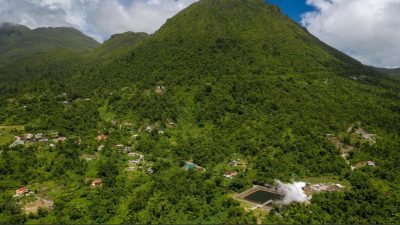
 Popocatepetl, Mexico (source: flickr/ El mundo de Laura, creative commons)


 Alexander Richter
15 Dec 2025
Alexander Richter
15 Dec 2025
Latin America has strong geothermal potential, yet progress remains limited. Chris McCormick explains why policy failures and misaligned actors still hold projects back.
In May 2020, ThinkGeoEnergy published an interview with Chris McCormick that challenged a widely held assumption in the geothermal sector: that Latin America’s vast geothermal potential would eventually translate into large-scale development if given enough time, funding, and technical support.
Five years later, that assumption looks increasingly fragile.
Despite sustained engagement by development finance institutions, repeated policy dialogues, and multiple exploration support mechanisms, geothermal capacity in most Latin American countries has barely moved. New greenfield projects remain rare, and the region’s energy transition has instead been dominated by rapid solar and wind deployment.
Against this backdrop, McCormick returned to the debate with an intentionally provocative message, presented at GEOLAC 2024: “Why geothermal power may never expand materially in Latin America.” The presentation was not designed to be polite. It was designed to force a reckoning.
As part of ThinkGeoEnergy’s ongoing analysis of global geothermal development, I followed up with McCormick to revisit what has, and has not, changed since our 2020 discussion.
A perspective shaped by attempted delivery
Alex: When we last spoke in 2020, you were already deeply involved in both private geothermal development and public risk-mitigation efforts. Can you briefly restate your background for context?
Chris: I entered geothermal through private investment in Reykjavik Geothermal following Iceland’s financial crisis, which led to hands-on work in early-stage development strategies in East Africa, particularly Ethiopia. In parallel, I worked on geothermal initiatives in the Middle East focused on direct use, and several development pathways in Mexico.
At the same time, I joined the consortium that designed and implemented the Geothermal Development Facility for Latin America, where I have served as Chief Investment Officer since inception. That combination of private development experience and public risk-mitigation work has shaped how I view what actually enables projects to advance and what consistently prevents them from doing so.
“Geothermal should happen, but it isn’t”
Alex: Your GEOLAC presentation was deliberately confrontational. Why take that tone?
Chris: Because the softer versions did not work.
Geothermal should happen in Latin America. In many GDF countries, it is the lowest-cost option for new greenfield baseload power. Yet despite this, outcomes remain marginal.
The presentation was meant as a systematic call-out of collective failure. Not just governments, but developers, financiers, development finance institutions, and advocates. We keep repeating the same conversations, using the same tools, and expecting a different outcome. That is not a resource problem. It is a system problem.
Policy first, everything else second
Alex: In 2020, you argued that the lack of policy differentiation between firm and intermittent power was the central barrier. Is that still your primary conclusion?
Chris: Yes. Even more strongly today.
Ministries must establish quantitative policy mechanisms that recognise the value of firm, dispatchable power. Without that, geothermal will always lose on paper to technologies with faster build times and lower upfront risk.
Türkiye is the clearest counterexample. The market there is not perfect, and geothermal development has faced regulatory, environmental, and social challenges. But Türkiye did one thing decisively right: it created a firm regulatory framework and a feed-in-tariff system that explicitly recognised geothermal as firm power.
The result is measurable. Türkiye grew from roughly 100 MW of installed geothermal capacity in 2010 to around 1,800 MW today. That did not happen because the resource was better than Latin America’s. It happened because policy aligned incentives across developers, equity, and lenders. This is why I push back so hard on the idea that Latin America’s lack of progress is inevitable.
If that first condition is not met, solving any of the other nine issues probably will not matter in a material way.
The “inconvenient truths”
Alex: Your GEOLAC 2024 slides include a section titled “Truths at the end of 2024.” What are the most uncomfortable ones for the sector?
Chris: There are several.
First, geothermal remains the lowest-cost form of greenfield baseload power in many Latin American countries. LNG is largely noise in this context, except where domestic gas already exists. Hydro faces increasing environmental and social constraints.
Second, using only active volcano analysis, there is at least 20 GW of geothermal potential across the GDF target countries.
Third, solar and wind should absolutely be built out as fast as grids can handle them. But batteries do not change the fundamental economics of firm power at scale. Firm power still matters.
And yet, despite all of this, geothermal remains sidelined. That is the inconvenient truth.
Beyond money: a structural deadlock
Alex: You are often associated with the concept of capital fungibility, but some argue the deeper issue is structural misalignment. How do you see that today?
Chris: That is a fair and important clarification.
Geothermal sits between four groups that remain poorly aligned: developers, governments as licensors, equity investors, and debt providers. Each group waits for the others to move first.
Developers want policy certainty before drilling. Governments want private commitment before changing frameworks. Equity wants permits and resource confidence. Debt wants contracts and stable revenues.
This creates a permanent chicken-and-egg problem. Until a structure forces these actors to engage in parallel rather than sequentially, geothermal will continue to stall, regardless of how much grant funding is available.
Technology distractions and false shortcuts
Alex: You are also critical of what you call “shiny objects.” Why?
Chris: Because they often avoid the real problem.
Advanced geothermal systems, hydrogen, and other emerging pathways can make sense in specific situations. But in Latin America, they do not address the critical path. Physics still matters. Drilling still matters. High-enthalpy flash power remains the lowest-hanging fruit.
Focusing on technologies that promise to remove risk without confronting policy and institutional failure often delays progress rather than accelerates it.
Why attach the GEOLAC slides?
Alex: You were clear that you wanted the GEOLAC 2024 presentation linked directly to this interview. Why is that important?
Chris: Because the slides show what was actually presented to the community. They are not softened for publication. They are a systematic call-out of failure across the system.
You can be the careful analyst. I am comfortable being the bad cop. But the industry should see the full argument as it was made.
Document: the GEOLAC 2024 presentation (pdf).
Still hopeful, but no longer patient
Alex: After all this, do you still believe geothermal can scale in Latin America?
Chris: I hope it does. But hope without structural change is not a strategy.
If countries adopt firm power policy, if development finance institutions align incentives rather than funding silos, and if developers, equity, and debt are forced into the same conversation earlier, geothermal can move. If not, we will still be having this conversation five years from now.
Editor’s note
This interview follows ThinkGeoEnergy’s 2020 discussion with Chris McCormick on geothermal policy and development barriers in Latin America. Together, they form part of an ongoing examination of why geothermal progress remains limited despite strong resource fundamentals and sustained international support.