Practical guide on shallow geothermal installation published in Germany
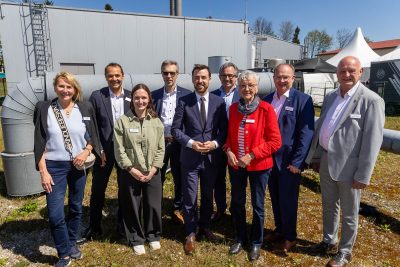
 Fraunhofer IEE in Kassel, Germany (source: Fraunhofer IEE, CC BY-SA 4.0


 Carlo Cariaga
20 Apr 2026
Carlo Cariaga
20 Apr 2026
Fraunhofer IEE has published a practical guide on deploying and implementing near-surface geothermal solutions to supply heat to existing buildings.
The Fraunhofer Institute for Energy Economics and Energy System Technology (Fraunhofer IEE) has published a new guideline for the development of heat supply concepts using near-surface geothermal energy, specifically through the deployment of geothermal probes in existing inner-city neighborhoods.
The guide was published as part of the work of the “UrbanGroundHeat” interdisciplinary consortium that included the Fraunhofer Institute for Energy Infrastructures and Geothermal Energy (Fraunhofer IEG), GASAG Solution Plus GmbH, Trianel GmbH, the Institute for Solar Energy Research Hameln, the Foundation for Environmental Energy Law, as well as the municipal utilities of Schleswig-Holstein, Solingen, and GGEW AG.
The full document (in German), “Guidelines for heat supply concepts using near-surface geothermal energy,” can be accessed via this link.
Deploying systemic solutions for shallow geothermal heating.
Near-surface geothermal energy, in combination with heat pump systems, can provide locally available, weather-independent heat supply to individual buildings, neighborhoods, and district heating networks. However, the deployment of such systems remains challenging.
The guide addresses the major challenges encountered when implementing new heat supply solutions in existing buildings, including heterogenous building structures, limited land availability, and complex permitting processes.
“With this guideline, we are transferring the model-based analyses and preliminary planning developed in the project into a systematic decision-making basis for practical application,” says Dr. Dietrich Schmidt, project manager at Fraunhofer IEE.
“In particular, the integrated consideration of heat demand, geological potential, system design, and regulatory constraints makes it possible to assess feasibility early on and to develop robust supply concepts for complex existing urban districts.”
The guide recommends a systemic approach, starting with a clearly structured planning process. This process includes early assessment of site-specific requirements, evaluating different technical options, and preparing for implementation.
Source: Fraunhofer IEE