Italy to hold inaugural geothermal auction under the new FER2 incentive scheme
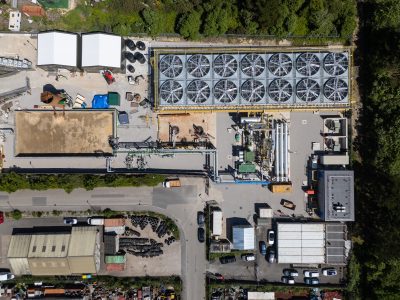
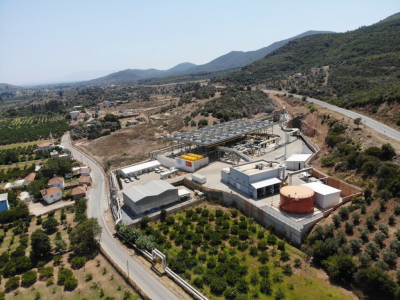
 Geothermal plant at Castelnuovo di Val di Cecina, Tuscany/Italy (Gabriele Delhey, commons/ wikimedia)


 Carlo Cariaga
24 Apr 2026
Carlo Cariaga
24 Apr 2026
The upcoming geothermal auction under the new FER2 incentive scheme could be the signal for renewed momentum for the geothermal sector in Italy.
Italy is set to hold the inaugural geothermal auction under the FER2 (Fonti Energetiche Rinnovabili / Renewable Energy Resources 2) incentive scheme, as indicated by the 2026 auction calendar issued by the Ministry of the Environment and Energy Security (MASE) under Director’s Decree no. 44/2026.
The inaugural geothermal auction is scheduled for 8 June 2026, allocating 30 MW specifically for zero-emission geothermal plants.
The importance of FER2 in reinvigorating Italy’s geothermal sector
Despite possessing some of Europe’s best geothermal resources and being the global pioneer of geothermal power, Italy has not commissioned a new geothermal power station since 2018. The FER2 mechanism, introduced by Ministerial Decree in June 2024 and approved by the European Commission, aims to change this by offering long-term Contracts for Difference (CfD). These provide revenue stability for 25 years, making projects far more attractive to banks and investors by reducing exposure to electricity market volatility.
Updated operational rules add transparency through clear bid-ranking criteria, strict environmental and emissions standards, and defined timelines — all essential for de-risking capital-intensive geothermal developments.
The FER2 legislation defines two geothermal categories:
- “Conventional geothermal with innovations” (€100/MWh, 100 MW national cap)
- “Geothermal with zero emissions” (€200/MWh, 60 MW national cap)
The 30-MW June auction round targets the zero-emission category, prioritising advanced binary-cycle or closed-loop systems with full reinjection of fluids and gases. The second round of auctions for the remaining 30 MW for this category is expected in 2027.
While the FER2 decree represents good progress in Italy’s geothermal growth, it was still found limited in many ways – modest capacity limits for geothermal, timeline restrictions with no expedited permitting support, and no targets set for geothermal heating and cooling. More details and commentary on the FER2 decree had been previously published by ThinkGeoEnergy.
What to expect in the coming months
Developers with projects that already hold authorisations, environmental approvals, and grid connection estimates are expected to participate actively ahead of the June deadline. Successful bidders will gain 25-year incentive contracts, providing the certainty needed to proceed with drilling and plant construction.
Further auction rounds are anticipated through 2026–2028, supporting FER2’s broader goal of approximately 4.6 GW of innovative renewables. While the initial 30 MW geothermal quota is modest compared to the country’s potential, it represents a credible market signal and the start of a renewed development cycle.
Paolo Basile, Head of Geosciences and Environment at Steam S.rl., captured the sector’s sentiment: “We know the Italian developers, we’ve been working hand-in-hand with them for years to progress there projects, and we know how frustrating it had become. Finally seeing these auctions come to market is more than a breath of fresh air – it’s confirmation that all the work we’ve put in over the past couple of decades is finally paying off. Not just our team but the whole industry is excited. There are bright days ahead.”
The June auction marks the beginning of a new phase. If permitting, grid, and execution challenges are addressed alongside the financial incentives, FER2 could help geothermal reclaim its role as a reliable, dispatchable, low-land-use renewable source in Italy’s energy transition.