Geothermal in 2025: Progress, Pressure, and Perspective
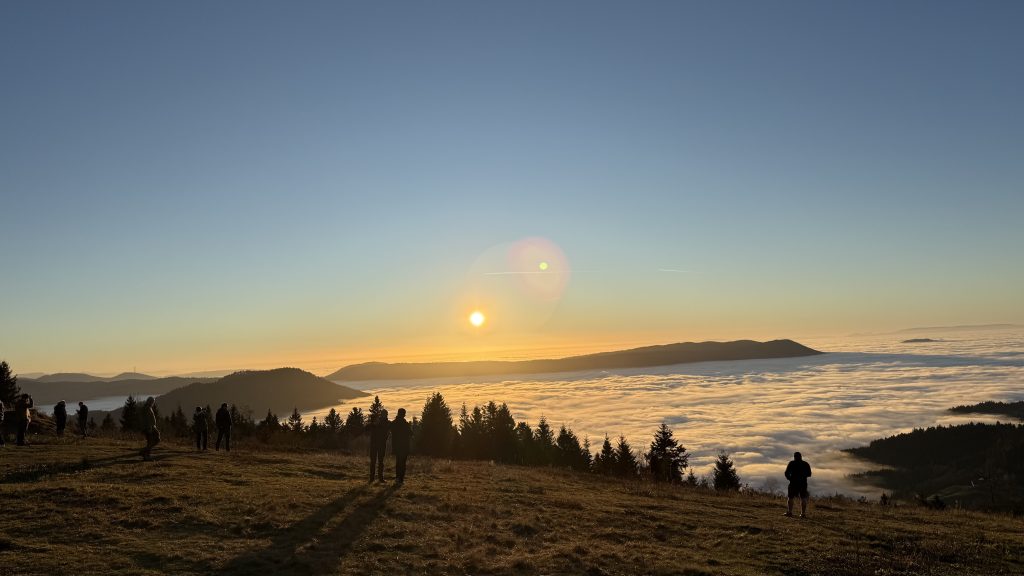 View over the Rhine area towards Strasbourg/ France (source: ThinkGeoEnergy)


 Alexander Richter
22 Dec 2025
Alexander Richter
22 Dec 2025
As 2025 closes, ThinkGeoEnergy reflects on geothermal’s progress, growing competition, slower growth, and why realism, heat, and new technologies still matter.
As the year draws to a close, geothermal finds itself with more attention, more expectations, and more competition than ever before, yet still facing familiar structural and economic hurdles.
A year of momentum, but not the breakout many hoped for
2025 did not become the global geothermal breakthrough year that some policy roadmaps, pitch decks, or conference panels had promised. Installed capacity continued to grow, but slower than the rhetoric suggested. Permitting timelines remained long. Financing stayed – seemingly – selectively focused on the new technologies. Cost inflation, grid constraints, and policy uncertainty continued to shape project decisions.
At the same time, geothermal undeniably moved further into the mainstream energy conversation. It featured more prominently in energy security debates, decarbonisation strategies, and industrial heat discussions. New actors entered the space, from technology startups to oil and gas majors, from climate NGOs to government-backed initiatives. That growing attention is both a sign of success and a source of pressure.
For the sector, the challenge remains scale, not potential.
Heat takes centre stage in Europe
One of the most consistent themes of the year was the renewed focus on geothermal heat, particularly in Europe. Municipalities, utilities, and policymakers increasingly see geothermal as a strategic option for district heating decarbonisation and long-term price stability.
Yet implementation remains uneven. Tendering processes are slow. Risk mitigation schemes, while improving, still vary widely by country. Project pipelines look promising on paper but often struggle to convert into drilling rigs on the ground.
The direction is clear. The pace remains slow, but with clear signs of things to be kicking off.
New technologies, steady hope, and cautious realism
Advanced and next-generation geothermal technologies continued to attract capital, headlines, and expectations. Enhanced geothermal systems, closed-loop concepts, and hybrid geothermal solutions are no longer niche ideas. They are now part of serious national and corporate discussions.
At ThinkGeoEnergy, we remain cautiously optimistic. These technologies matter and do so greatly. They could unlock scale, new geographies, and new applications. But they also require time, patience, data, and learning by doing. Promises alone will not drill wells.
The industry benefits when ambition is paired with realism. So projects such as that by Fervo in Utah, Eavor in Germany and the upcoming/ ongoing superhot geothermal projects in Oregon, Iceland and New Zealand are signs of things moving.
A crowded conversation, and the role of independent media
Geothermal’s growing visibility also means a more crowded communication landscape. Industry associations, NGOs, project developers, technology providers, investors, event organisers, and individual voices are all competing for attention, influence, and narrative control.
This creates a challenge for any independent news platform. Our role is not to amplify every promise, nor to dismiss ambition, but to provide balanced coverage across technologies, regions, and business models. That includes reporting on progress, delays, setbacks, and uncomfortable questions.
It also means making difficult operational choices about focus and positioning in an increasingly noisy space.
ThinkGeoEnergy in numbers, and behind the numbers
In 2025, ThinkGeoEnergy’s three-language media network reached up to seven million combined pageviews, with around 1.6 million visits across our platforms. Our audience spans professionals across development, engineering, policy, finance, and research, and reaches far beyond the traditional geothermal core.
Behind those numbers is a small, committed team of six people, working across multiple time zones, languages, and formats. Daily news coverage, regional reporting, newsletters, webinars, social media, and events are not produced by algorithms, but by editors, researchers, and contributors who care deeply about accuracy and credibility.
Running an independent niche media platform remains a constant balancing act between editorial ambition, financial sustainability, and limited resources.
A big thanks to the team around Carlo (Editor and Webinar manager), Sam (social media), Merve (leading our Turkish platform), Oscar (leading our Spanish platform) and Ruben (research).
Strategic focus in a changing media model
Like much of the media industry, geothermal news does not operate in a stable business environment. Advertising models are under pressure. Attention spans are short. Expectations are high.
Over the past year, we made deliberate decisions to sharpen our focus, strengthen our own positioning, and invest where we believe we add the most value. That includes prioritising our core platforms, our editorial voice, and our direct engagement with the sector.
It also means being selective, even when that is not the easiest path.
Looking ahead to 2026
The year ahead will bring important milestones for the geothermal community and for ThinkGeoEnergy.
We are preparing the launch of a redesigned website, with a cleaner structure, improved readability, and a more professional look that better reflects the maturity of both the sector and our role within it.
We will continue to deepen our business intelligence and research work, sharing more structured analysis, datasets, and market insights through ThinkGeoEnergy, while also supporting clients through research and consultancy.
And the calendar is already filling up. Early 2026 starts with GeoTherm in Offenburg, followed by the World Geothermal Congress in June. These events matter, not just for announcements, but for honest conversations about what is working and what is not. So if you see us, say hi and engage with us.
Staying realistic, staying engaged
Geothermal does not need hype. It needs persistence, capital, skills, and patience. It needs policymakers who understand timelines, investors who accept long-term returns, and developers who are prepared for complexity.
As a media platform, ThinkGeoEnergy will continue to be a partner to the global geothermal community. We will ask questions. We will share data. We will give space to different voices, even when they disagree.
And we will keep showing up.
Thank you to our readers, contributors, partners, and critics for engaging with us throughout the year. We look forward to continuing the conversation in 2026.