Türkiye’s geothermal growth lessons – insights by KAPSARC
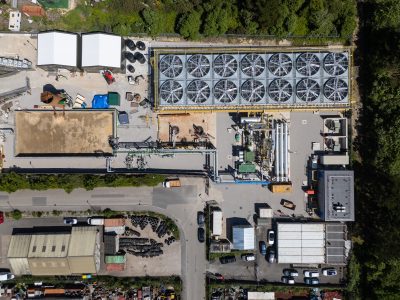
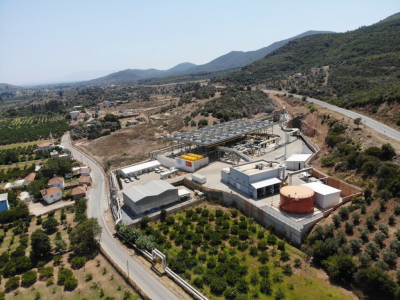
 Kizildere 3 Geothermal Power Plant, Turkiye (Source: TWI / Zorlu Energy)


 Alexander Richter
24 Feb 2026
Alexander Richter
24 Feb 2026
A new KAPSARC report analyses Türkiye’s geothermal market growth, highlighting policy design, financing tools, and lessons for emerging markets.
A new report by the King Abdullah Petroleum Studies and Research Center (KAPSARC) examines the rapid growth of Türkiye’s geothermal sector and identifies policy and market mechanisms that could inform geothermal development in other countries.
The report analyses how Türkiye became one of the world’s leading geothermal power producers within little more than a decade, and what structural elements supported this expansion.
From niche player to global leader
According to the report, Türkiye has emerged as one of the top countries globally in installed geothermal power capacity. The country’s growth has been driven by strong private sector participation, clear policy incentives, and improved access to financing.
The report outlines how geothermal capacity expanded rapidly after the introduction of feed-in tariffs under the Renewable Energy Support Mechanism (YEKDEM). These tariffs provided long-term revenue certainty and helped mobilise domestic and international capital.
A key takeaway for international markets is the importance of early-stage risk mitigation. Türkiye combined resource exploration support, concessional financing, and predictable power purchase conditions to attract developers willing to take drilling risks.
Policy stability and investment framework
KAPSARC highlights that regulatory clarity and long-term policy signals were central to scaling the sector. Investors benefited from:
- Guaranteed offtake arrangements
- US dollar-denominated feed-in tariffs in earlier phases
- Bonus incentives for locally manufactured equipment
- Streamlined licensing procedures
This framework enabled the rapid development of projects, particularly in western Türkiye, where geothermal resources are concentrated.
The report also notes that competitive pressures and tariff revisions in later years required developers to improve efficiency and optimise project design. This transition from incentive-driven growth to a more market-based framework is described as a critical phase in the sector’s maturation.
Financing and risk management lessons
One of the most relevant insights for an international audience is Türkiye’s approach to financing geothermal risk.
The report describes how multilateral development banks and international financial institutions played a catalytic role. Risk-sharing mechanisms and credit lines reduced exposure for commercial lenders, while domestic banks gradually increased participation as the sector matured.
This blended finance approach helped move geothermal from a perceived high-risk technology to a bankable infrastructure asset class within the country.
The KAPSARC analysis suggests that countries seeking to replicate Türkiye’s trajectory should prioritise:
- Public support for exploration and drilling risk
- Clear and time-bound incentive structures
- Strong coordination between energy and finance ministries
- Development of domestic technical expertise
Beyond power: heating and integration potential
While Türkiye is widely recognised for geothermal power generation, the report also touches on the broader potential for direct use applications and district heating.
Expanding geothermal heat utilisation could further enhance system value, particularly as electrification increases power demand and grid flexibility requirements.
For international markets, the Turkish case illustrates how geothermal can anchor regional economic development, strengthen energy security by reducing fuel imports, and create domestic supply chains.
Implications for emerging geothermal markets
The KAPSARC report positions Türkiye as a case study in how policy sequencing, financial innovation, and private sector engagement can accelerate geothermal deployment.
For countries in Eastern Europe, Latin America, Africa, and Southeast Asia seeking to expand geothermal development, the Turkish experience offers several practical lessons:
- Early revenue certainty accelerates capacity growth
- Risk mitigation instruments unlock private capital
- Local manufacturing incentives can deepen value chains
- Policy adjustments are required as markets mature
At the same time, the report notes that sustaining growth will require continued resource management, grid integration planning, and regulatory consistency.
In terms of the local manufacturing aspect, an article in 2025, shared that: “Government support enabled the establishment of 50 component makers and 350 subsuppliers in the geothermal power segment in Turkey … They employ 50,000 people altogether. The localization rate has reached approximately 55%, the top official revealed. Parts such as generators, power electronics, turbines, exhaust lubrication and speed control systems and steam injectors are now produced domestically” according to Deputy Minister of Energy and Natural Resources Abdullah Tancan.
The full KAPSARC report provides a detailed assessment of Türkiye’s geothermal development pathway and its implications for future energy transition strategies.
Source: KAPSARC