Talks ongoing to resume development work at Tulu Moye geothermal site, Ethiopia
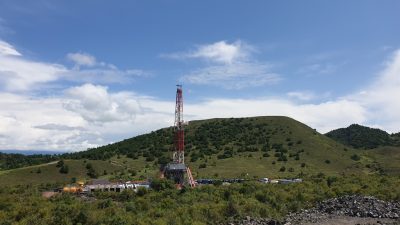
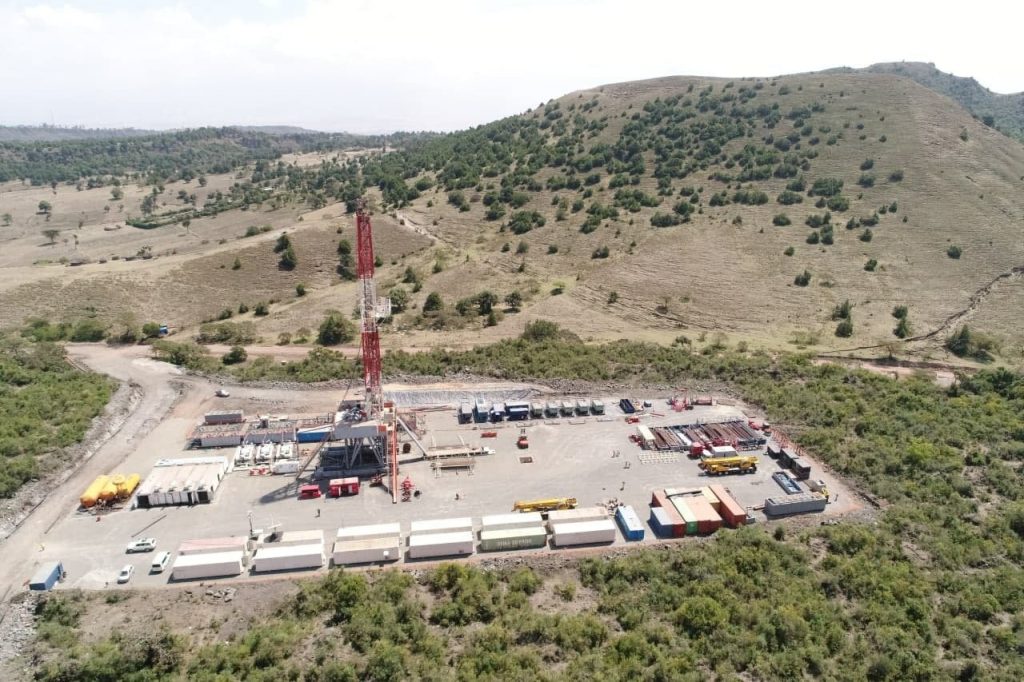
 Drilling rig on site of the Tulu Moye geothermal project, Ethiopia (source: Reykjavik Geothermal)


 Carlo Cariaga
9 Feb 2026
Carlo Cariaga
9 Feb 2026
Talks are now ongoing to resume construction work at the Tulu Moye geothermal site in Ethiopia after years of no activity with conflicting explanations.
After about two years of no activity, there are now reports of talks ongoing to resume construction work at the Tulu Moye geothermal project located in the Arsi Zone in Oromia region, Ethiopia. The developer, Tulu Moye Geothermal Operations (TMGO), has submitted new preconditions to restart the project to a negotiating committee composed of representatives of state-owned Ethiopia Electric Power (EEP), and the Ministries of Finance, Justice, and Mines.
The project had originally envisioned a total development of 150 MW – 50 MW for Phase 1, and 100 MW for Phase 2 – at the Tulu Moye site. A total of six wells had already been drilled by two drilling contractors, namely KenGen and Marriott Drilling. The project had also received several grants through the years from different institutions including the African Development Bank, the Geothermal Risk Mitigation Fund, and the U.S. International Development Finance Corporation.
Work stoppage and conflicting claims
A report published in 2024 stated that TMGO has decided to cease its operations due to security threats, notably from the Oromo Liberation Army (OLF-Shane). According to the report, dozens of armed men stormed the project site in 2023. This resulted in the withdrawal of foreign investors and developers in fear of security risks.
The report further states that former employee said that they had been paid a four-month advance as of February 2024 in anticipation of the project closing down. Marriott Drilling had also ceased working at the site, following KenGen which had already exited the venture before the incident.
However, the story seems to be more complicated as government and state officials offer other reasons for the closure of the project that conflict with the statements made by TMGO.
Ashebir Balcha, CEO of EEP, said that there are no such security concerns in the area. Moreover, other large-scale energy projects such as the Assela Wind Farm have been operating peacefully in the same zone. Instead, the CEO proposes that the shutdown was related to the quality of geothermal resource found in the site.
“The real reason [for the shutdown] is that the developers failed to find the geothermal energy source after investing a large sum of money. We also believe the financiers are no longer willing to inject more funding after seeing the drilling was not fruitful,” said Ashebir.
New terms under negotiation
Abebe Degefa implied that renegotiation was made necessary due to a combination of technical and financial challenges. “Due to the lack of adequate geothermal resources at the site and the resulting financial difficulties, lenders were not prepared to continue funding the project,” he said. “This made contract renegotiation unavoidable.”
Sources say that the new preconditions set by TMGO include guarantees on foreign currency availability, permission to transfer profits earned from electricity sales abroad in US dollars, and the inclusion of the New York Convention on arbitration. The last item will oblige member states to recognize arbitration decisions that have been made in other jurisdictions.
Tesfaye Tilaye, Director at EEP, states that all parties are working to conclude the negotiations as quickly as possible, and for work to resume on the project. He also adds that the target development plan of 150 MW remains unchanged.