Geothermal research drilling in Strandeiland, Netherlands reaches target 1963m depth
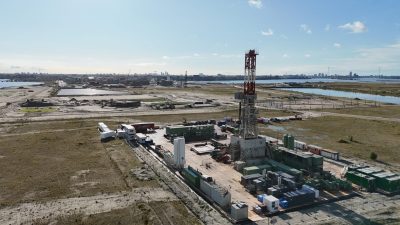
 Drilling rig at Strandeiland in Amsterdam, Netherlands (source: SCAN)


 Carlo Cariaga
15 Oct 2025
Carlo Cariaga
15 Oct 2025
A research well to evaluate geothermal formations has been drilled to the target depth at Strandeiland in Amsterdam, Netherlands as part of the SCAN program.
A research well to investigate geothermal resources on Strandeiland in Amsterdam, Netherlands has reached its target depth of 1963 meters below Normal Amsterdam Ordnance Datum (NAP). Completion of the well will proceed in the coming days, after which extensive production and injection tests will be done to provide insight on the permeability of the subsurface geology.
Research drilling in Strandeiland is part of the SCAN program, which seeks to collect subsurface information around the Netherlands to determine sites suitable for geothermal energy extraction. Drilling at Strandeiland started in September 2025 with the aim of exploring multiple geothermal layers. The Strandeiland site was also strategic as it may provide information on the central part of the province of North Holland, the western part of Flevoland, and the NW part of the province of Gelderland.
The drilling focused primarily on the approximately 270-million-year-old sandstone layers of the Slochteren Formation (part of the Upper Rotliegend Group). These sandstone layers were indeed encountered between 1741 and 1893 meters below NA, and 90 meters of drill cores were recovered from the formation. Another layer investigated with the drilling, the Breda Formation, was also discovered.
By the end of the year, the well will be dismantled, the site will be finished, and the land will be restored to its original state. Since the project is part of SCAN, all collected data will be made public.
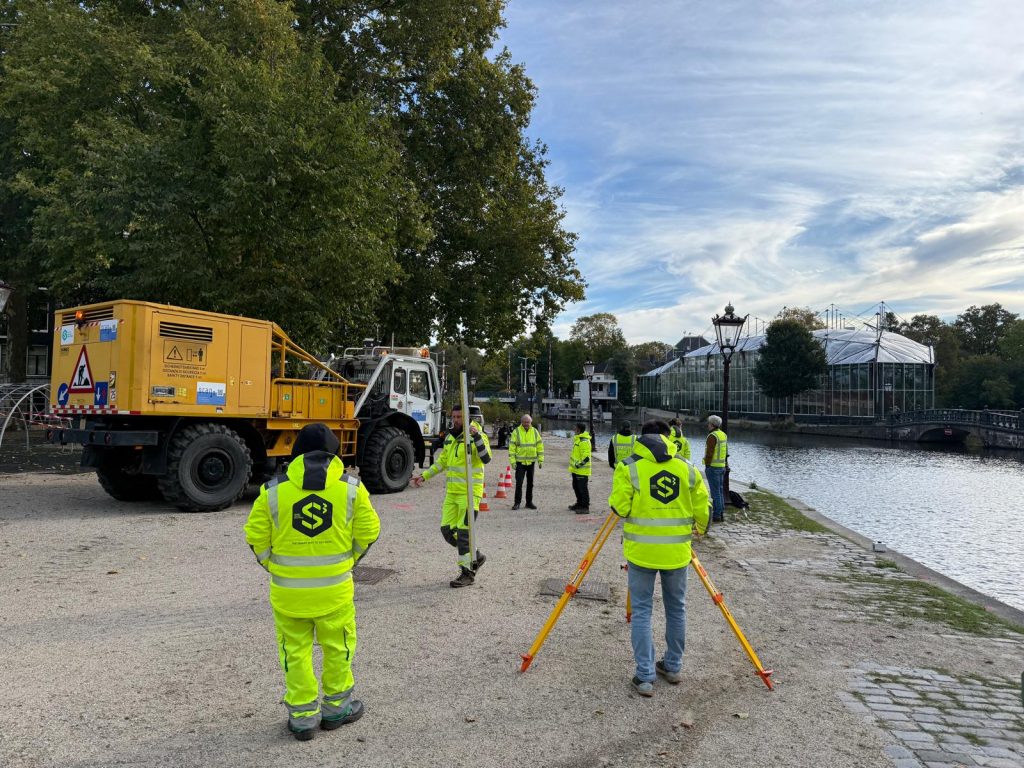
Multiple research wells have been drilled in the Netherlands as part of the SCAN program, most recently in Ede, Gerwen, Heesch, and De Bilt. There is also an ongoing large-scale seismic survey in the Amsterdam metropolitan region, covering nine municipalities, which will take approximately four months.
Source: SCAN