Stimulation tests in Haute-Sorne geothermal project completed without perceptible seismic events
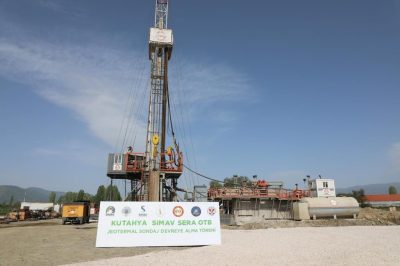
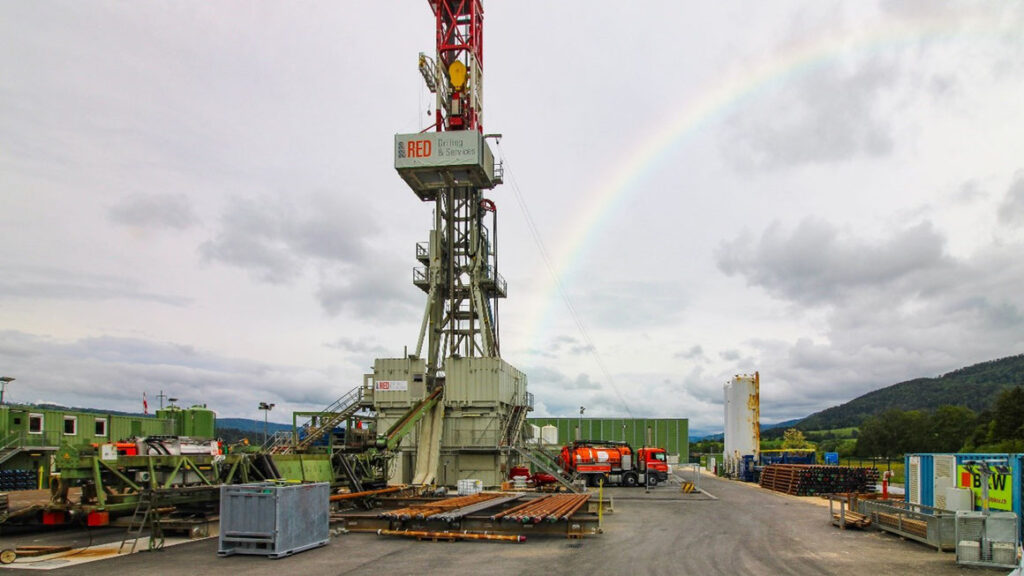 The drilling rig at the site of the Haute-Sorne geothermal project, Switzerland (source: Geo-Energie Jura)


 Carlo Cariaga
6 Aug 2025
Carlo Cariaga
6 Aug 2025
Stimulation tests have been completed at the Haute-Sorne geothermal project in Switzerland, and data will be processed to decide on the project's next steps.
Geo-Energie Jura AG has announced that stimulation tests have been completed for the Haute-Sorne geothermal project in Jura, Switzerland, and that the tests have been completed successfully with no seismic events felt. The data collected during this phase will be analyzed to help the developer decide whether or not to proceed with the next phase of the project.
After approval for the stimulation tests were granted, work began on 24 June 2025. The stimulation tests aimed to quantify the capacity to increase the permeability of the rock and thus estimate the possibility of circulating water in the future geothermal reservoir. It was also a critical part of reducing seismic risk for the project. The sequence of events during the stimulation tests were as follows:
- A temperature measurement was done at 3986 meters, indicating 135 °C, in line with expectations. A temperature of over 150°C is expected in the future geothermal reservoir at a depth of 4,500 to 5,000 meters.
- The borehole casing was then perforated to a depth of 3,800 meters.
- Eight seismometers were lowered to the bottom of the borehole. These were calibrated using a vibrating truck.
- Water injection began on 8 July. This was done using pumps normally installed in the underground laboratory in Val Bedretto and loaned by ETH Zurich. Over several days, the flow rate and pressure were gradually increased, reaching a maximum of 80 l/min and 270 bar.
- Water injection was stopped on July 14 due to the threshold magnitude being reached twice, in accordance with established guidelines. The well was opened to relieve pressure. The total injected volume was 430 cubic meters. The plan included an optional second stimulation cycle (500 cubic meters), but this was not necessary, as sufficient data was acquired.
- Complementary hydraulic and geophysical measurements and monitoring and observation of seismicity, reflux, and all the monitored parameters were done unit the last day on 31 July.
For background, the project parameters states that the injection will be temporarily suspended for analysis if the seismicity reaches a magnitude of 0.3. Moreover, the tests will be permanently stopped if magnitude 0.9 was reached. If the magnitude were to reach 1.5, the well pressure will be released.
The data collected will make it possible to characterize the mechanical and hydraulic properties of the rock and thus define the operational parameters of the effective stimulation (pressures, flow rates, durations) and the optimal orientation of the future horizontal drilling. Stimulation of the geothermal reservoir is planned during the second phase.
Several specialists were on hand 24/7 to ensure that operations were done safely and according to agreed upon threshold standards. Although the injection was carried out continuously, no noise pollution was created. Environmental monitoring, including the analysis of flowback water, was done by a qualified engineering firm.
The well seismometers recorded a total of 3,387 seismic events as of 31 July, all of very low magnitude. Only four tremors could be detected during injections by the surface network and located by the Swiss Seismological Service (SED) at ETH Zurich, as part of its independent basic seismic monitoring. The strongest tremor detected on this network was at a 0.3 magnitude. As expected, seismic activity decreased sharply as soon as injections ended. It is now only 2 or 3 microseisms per day, compared to several hundred during the tests.
Continuous monitoring of pressure and seismicity remains in place. Over the next few months, operational activities will be limited to maintenance work and any additional measurements.
Analysis of the collected data will then follow, which will allow for the updating of the geological model and risk studies. A corresponding report wil be sent to the relevant authorities. The project can proceed only if all safety guarantees are met.
Source: Geo-Energie Jura