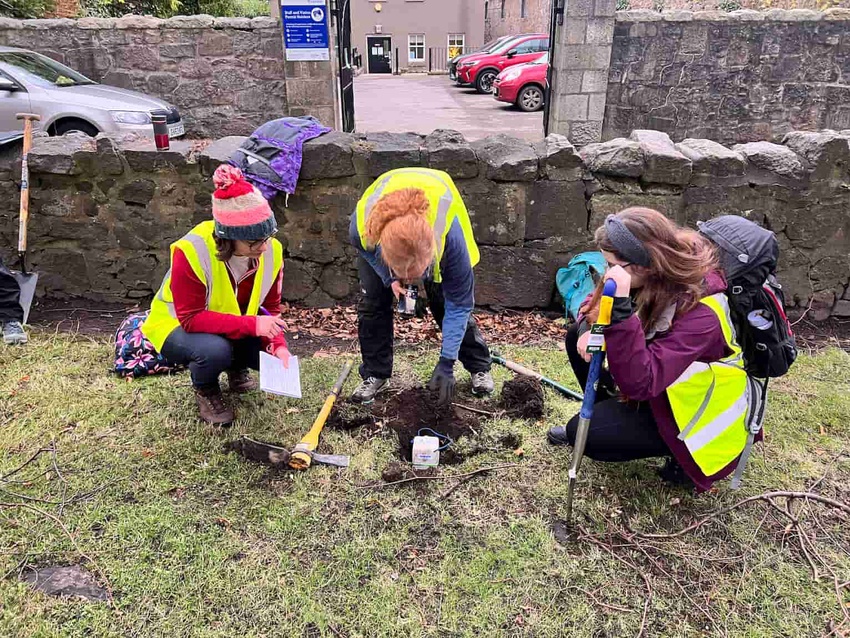
Seismic sensors deployed as part of geothermal pilot project in Aberdeen, UK
 Technician Iona Copley, researcher Tristan Roberts, University of Aberdeen Principal Professor Peter Edwards, and Dr David Cornwell, AGFP co-lead, installing a seismic node (source: University of Aberdeen)


 Carlo Cariaga
13 Feb 2026
Carlo Cariaga
13 Feb 2026
About 100 seismic nodes are being deployed across Aberdeen in the UK to create a 3D subsurface map as part of a geothermal exploration pilot project.
About 100 small seismic nodes have been deployed across the city of Aberdeen in Scotland, UK as part of the Aberdeen Geothermal Feasibility Pilot (AGFP), a project that aims to characterize the geothermal potential in the city thereby de-risking future geothermal investment.
The nodes will be installed across a mix of public and private green spaces, including domestic and commercial properties, as well as areas owned by the local municipality. The sensors are small (10 cm x 10 cm x 30 cm) and will be buried into the ground. Over the next 1-2 months, they will record natural and man-made vibrations to help create a map of the granite and other subsurface structures to a depth of 5000 meters below the city.
“Most people won’t notice the sensors once they are in place but what we learn will help us understand whether geothermal heat could one day provide a clean, local source of heating for homes and public buildings, reducing carbon emissions and support a more sustainable energy future for Aberdeen,” said Dr Amy Gillligan, a researcher for the AGFP.
The project, which had just recently awarded a £1million grant from UK Research and Innovation (UKRI), is targeting to drill an instrumented borehole to a depth of over 500 meters on King’s College Campus in Old Aberdeen. This borehole will provide direct subsurface temperature, geology and hydrology data which will help determine the potential for geothermal heating in homes, the University, and other buildings across the city.
Data collected from the borehole and the seismic survey will complement each other, providing a clearer picture of geothermal potential in Aberdeen. The project will be the first to provide in-field geological data needed to advance the University’s geothermal aspirations and similar initiatives across the UK. All the data collected by the team will be made openly available.
Source: BBC and University of Aberdeen