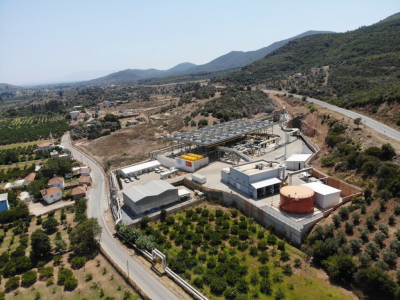
Positive results encourage continuation of Haute-Sorne geothermal project, Switzerland
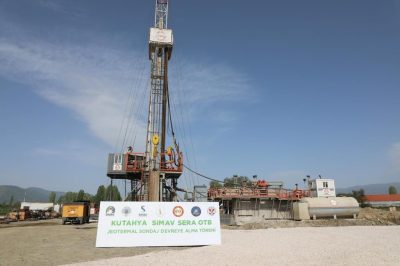
 The drilling site at the Haute-Sorne geothermal project, Switzerland (source: Video screenshot, RED Drilling & Services)


 Carlo Cariaga
3 Oct 2025
Carlo Cariaga
3 Oct 2025
The exploration phase of the Haute-Sorne geothermal project in Switzerland has been completed, with positive results encouraging the project's continuation.
Geo-Energie Jura SA (GEJ) has announced the completion of the exploration phase of the Haute-Sorne geothermal pilot project in Jura, Switzerland. The results indicate that the permeability of the rock can be sufficiently increased to produce an exploitable geothermal reservoir while keeping within seismicity thresholds.
The findings present an optimistic picture for the continuation of the Haute-Sorne project, but this will depend on the approval of cantonal authorities. Two reports have been initially submitted to the cantonal authorities thus far. The reports by GEJ will be reviewed by the canton’s independent expert panel, who will provide recommendations regarding the project’s seismic risk evaluation. In parallel, GEJ’s shareholders will prepare the decision-making basis for the next steps. A decision is expected in spring 2026
Moreover, the results open the prospect the prospect of new projects in Switzerland. GEJ plans to initiate assessments in the country for projects of between 10 to 30 MWe power generation capacity, ideally with co-generation of heat.
Experience from comparable projects abroad shows that levelised electricity generation costs of under 15 Rp./kWh (USD 0.19/kWh) are realistic going forward. These economics improve further when power and heat production are combined.
Technical results from Haute-Sorne will be presented at the European Geothermal Congress in Zurich. In November, a media briefing is also planned in the Canton of Jura within the framework of the Advisory and Information Commission (CSI).
Stimulation tests and seismic monitoring
The exploration phase of the Haute-Sorne geothermal pilot project was concluded with the stimulation test in July 2025. The objective was to demonstrate that rock permeability can be increased sufficiently to create a usable geothermal reservoir, while complying with the prescribed seismic thresholds.
Over the six-day test, a total of 430 m³ of water was injected at a depth of 3,800 m, with wellhead pressures of up to 270 bar. The microseismic response of the subsurface was recorded using seismometers installed directly in the borehole. The sensors’ close proximity to the stimulation zone enabled very high measurement sensitivity.
In total, around 3,400 microseismic events were detected—providing an extensive dataset for assessing the seismic reactivity of the rock mass. In parallel, the Swiss Seismological Service (SED) at ETH Zurich independently monitored surface seismicity on behalf of the canton, in order to provide the authorities and the public with reliable, independent and timely information.
This combined network of GEJ and SED sensors forms the basis of the traffic-light system in GEJ’s seismic monitoring and risk management plan. During the test, the network registered only the four strongest events, with a local magnitude of ML 0.3—well below the threshold of human perception.
Key findings and results
GEJ has submitted two reports to the Jura cantonal authorities that will determine the further development of the pilot project. These documents are the first in a series that will be submitted over the coming months and thoroughly reviewed by the canton’s independent expert panel.
The key findings from the first submitted reports are as follows:
- Natural, open fracture systems with low permeability were identified at reservoir depth. These fractures can be hydraulically stimulated at the planned pressures. The observed geomechanical processes are consistent with results from the Bedretto Underground Laboratory and the FORGE project in Utah. The rock’s permanent permeability was increased by more than a factor of 100.
- A temperature of 135 °C was measured at 4,000 m; for 5,000 m, a temperature of around 168 °C is forecast. The average geothermal gradient of 31.5 °C/km at Haute-Sorne lies within the Swiss mean range.
- The stimulated fracture area increases—as expected—with increasing injected volume, consistent with observations from other projects.
- Based on the multi-stage stimulation concept, and while complying with thresholds for induced seismicity and seismic risk, a sufficiently large heat-exchange area can be created per stimulated well segment. Thirty stimulation stages per well are currently planned to achieve the circulation rates required for economic operation.
- The seismic reactivity of the rock at Haute-Sorne is more than 60 times lower than in the Basel geothermal project. Accordingly, seismic risks are significantly lower than in the 2015 risk study, which conservatively assumed Basel-like reactivity and formed the basis for the project approval at the time.
Source: Geo-Energie Jura