Pioneering 25-year geothermal heating project in Unterschleißheim, Germany set for expansion
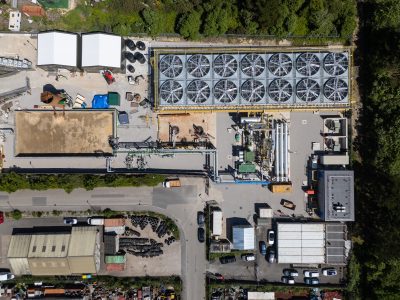
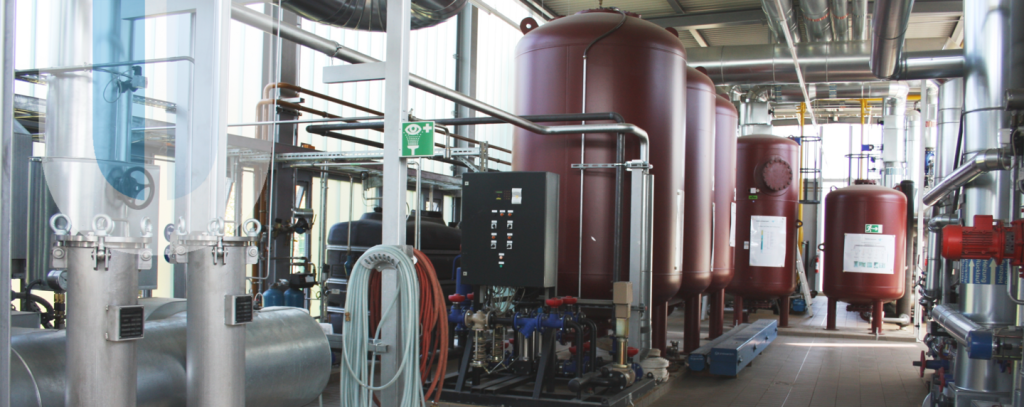 Interior of geothermal heating plant at Unterschleißheim, Germany (source: Geothermie Unterschleißheim)


 Carlo Cariaga
27 Aug 2025
Carlo Cariaga
27 Aug 2025
After 25 years of successful operations, geothermal heating in Unterschleißheim, Germany is set to expand based on growing demand and steady community support.
On the 25th year of operations of the geothermal heating plant in Unterschleißheim, Germany, the city is considering the drilling of a second production well to further expand the coverage of the geothermal heating service.
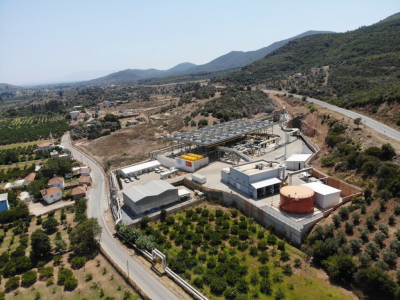
Operating since 2003, the geothermal heating plant of Geothermie Unterschleißheim AG (GTU) made Unterschleißheim the first municipality in the Munich district to use geothermal water for heating. The company achieved profitability in 2014, well ahead of forecasts set at 2028. In the past decades, the geothermal heating system proved to be a reliable and climate-friendly pillar of energy supply in the city.
The deep geothermal plant in Unterschleißheim derives its heat energy from thermal waters at a depth of 1961 meters. The temperature of the thermal water is at around 80°C. The municipal company operates a more than 22-kilometer long district heating network which currently supplies more than 4000 apartments, 351 buildings, and several businesses. This accounts for about 70% of the city’s heat supply. To date, the city has invested EUR 36.5 million on the geothermal heating system.
Expansion plans are now underway, driven by a growing demand for geothermal heating. Two years ago, more than 1000 households expressed interest in being connected to the network. This means that a further EUR 30 million will be invested in expanding the network by 2028, about 40% of which will come from federal funding. There are also plans to deploy a large-scale heat pump by 2027, as well as to drilling a second production well.
“Based on our experience, we assume that we will have the additional 20 MW under contract in five to seven years,” said Thomas Stockerl, Chairman of GTU.
Community support for geothermal is strong, despite the fact that the price per kW for geothermal is slightly higher than that of gas. Stockerl explains that homeowners still get savings when factoring in the costs of maintenance and system renewable. The Chairman is also convinced that geothermal energy will become more affordable in the medium to long term as gas and oil prices become more expensive.
“By 2045, GTU should be completely greenhouse gas neutral – with hydrogen or biogas as backup,” concluded Mayor Christoph Böck. “We want to supply 50 percent of the buildings, including commercial ones.”
Source: TiefeGeothermie, Merkur, and Stadt Unterschleißheim