Mitigating geothermal drilling risks with AI-driven advances
 Feature article - Mitigating geothermal drilling risks with AI-driven advances


 Carlo Cariaga
4 Aug 2025
Carlo Cariaga
4 Aug 2025
Leveraging AI-backed solutions from oil and gas drilling, NOV helps geothermal operators drill their wells with reduced risk and enhanced efficiency.
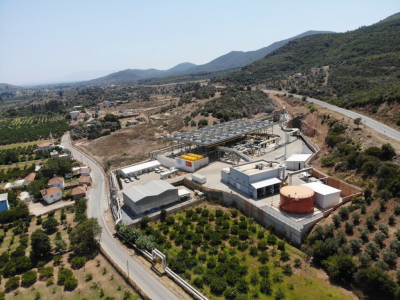
Drilling remains one of the primary cost drivers of any geothermal development. This means that it also presents plenty of opportunities for improvement. In this article written by Gary Hickin of NOV, we take a close look at the successful deployment of the company’s AI-backed Drilling Beliefs and Analytics platform for geothermal drilling operations in Europe. The case study examines the use of advanced data processing technologies for real-time feedback and proactive remediation of potential issues.
Geothermal well construction is gaining momentum in more locations, driven by the need for reliable energy sources that address global sustainability and carbon reduction targets.
However, tapping into deeper, hotter geothermal energy resources presents several drilling challenges, including wellbore instability, differential sticking, and fluid losses. These challenges are compounded in remote locations where real-time oversight is limited, and traditional monitoring techniques cannot effectively detect risks early.
A geothermal operator in Europe approached NOV to develop a proactive monitoring and mitigation solution that would enhance drilling efficiency, safety, and reliability. NOV proposed a solution backed by artificial intelligence (AI), which integrates data analytics and machine learning to continuously analyze high-frequency data, extract patterns, and report actionable insights more quickly and accurately than conventional analysis methods.
NOV originally developed its AI-driven drilling solution for oil and gas operations. The solution utilizes real-time drilling data to build a probability index or belief system that assesses the likelihood of situations such as ballooning, pack-off, cuttings buildup, or bit whirl. The drilling team receives alerts to take the appropriate corrective actions that mitigate the issue and allow drilling to continue.
Adopting AI in geothermal through a methodical approach
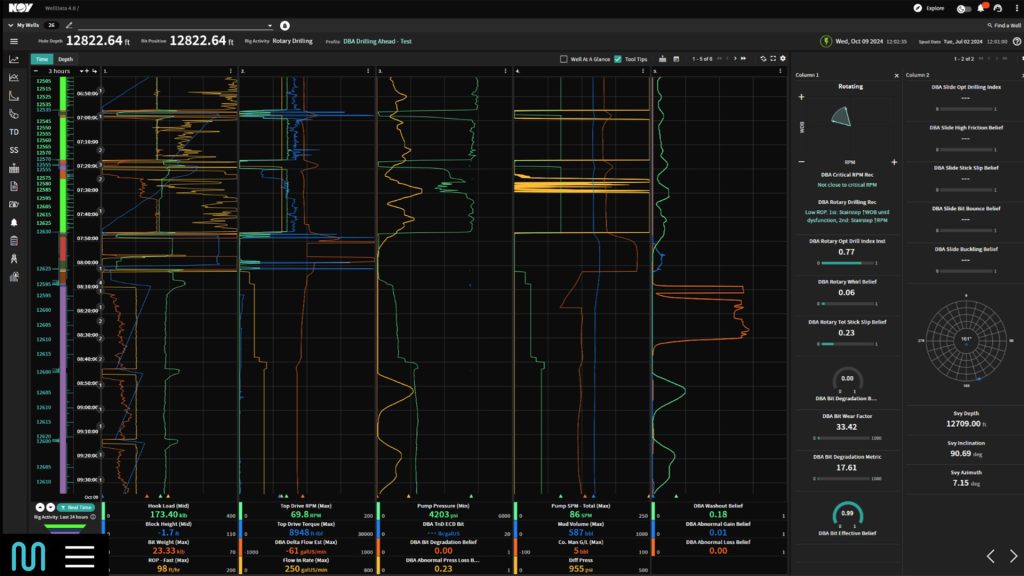
Encouraged by the results of the AI system’s predictive capability on its legacy drilling data, the operator agreed to deploy NOV’s AI drilling solution in a two-well geothermal pilot study. Specifically, the solution would focus on detecting abnormal pressure losses that could indicate formation damage, fluid losses, or wellbore instability.
NOV followed a structured methodology to adapt the AI solution for the geothermal pilot. The system was connected to existing drilling infrastructure on two geothermal drilling rigs, each equipped with a suite of sensors and electronic drilling recorder (EDR) systems. These systems provided high-resolution, real-time data on parameters including weight on bit, torque, rotary speed, standpipe pressure, and block position.
Each rig also included an edge computing device integrated with the rig’s EDR data streams, which acquired and processed the real-time operational and contextual data (including information on the bottomhole assembly, casing, and fluids) that served as inputs for the AI models.
The AI system employed a hybrid architecture specifically designed to address geothermal dysfunctions. The architecture included Bayesian networks that encode expert drilling knowledge to facilitate probabilistic reasoning. In addition, decision-tree algorithms draw knowledge from historical geothermal and analogous oil and gas wells to perform pattern recognition.
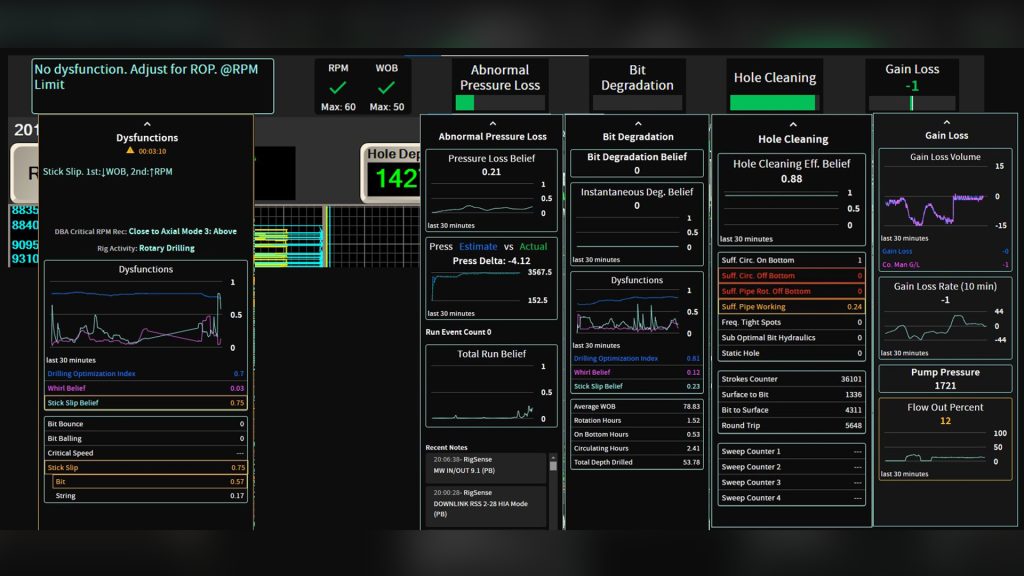
These components enable the AI system to combine learned data behaviors with encoded expert knowledge, accurately predicting drilling conditions and detecting anomalies.
The system used the output to create belief scores ranging from 0 to 1, which represent the probability of various dysfunctions. The operator visualizes these scores on custom dashboards and sets alerts that serve as a digital “tap on the shoulder.” The operator receives an earlier warning of a potential problem, allowing them to take the proper corrective actions to avoid non-productive time (NPT) or damage to drilling equipment or the wellbore.
Proving AI’s potential in the pilot
During deployment in the two-well pilot, the AI-driven solution collected and processed more than 70,000 real-time data points per hour, per rig. The solution consistently demonstrated its ability to detect and classify early signs of abnormal pressure losses, such as mud loss and differential sticking.
The operator observed several additional operational benefits from the AI-driven solution, including:
- Reduced alert latency, with the edge computing architecture alerting the operator of pressure abnormalities up to 45 minutes earlier than conventional monitoring systems.
- Minimized NPT through earlier and more accurate corrective actions, preventing downhole incidents from escalating and requiring longer and more expensive remediation.
- Earlier event prediction, thanks to the AI’s ability to quickly detect trends, identify root causes, and propose the right corrective actions.
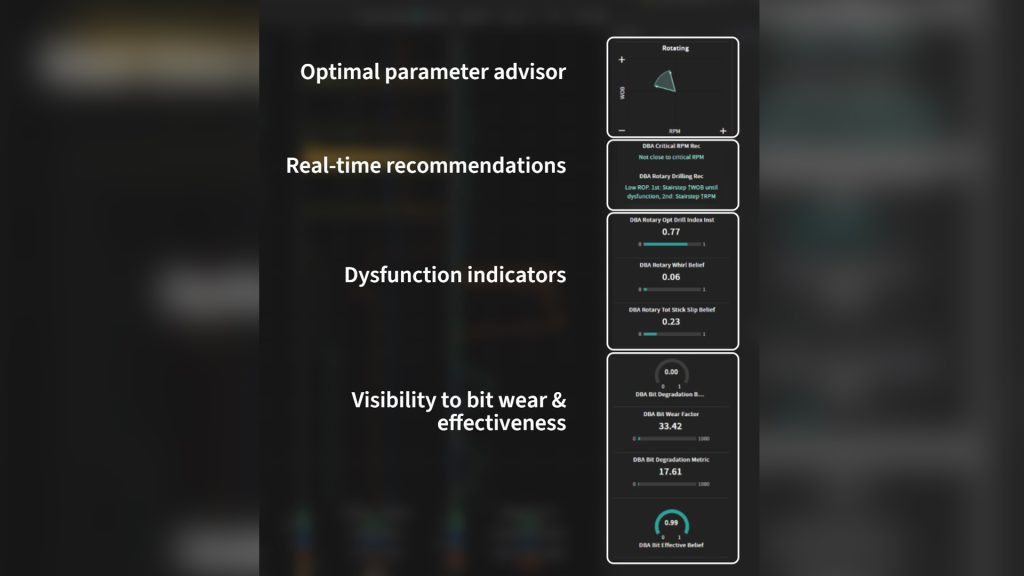
The successful adaptation of an oil and gas drilling data solution to geothermal drilling showcases AI’s versatility and potential in the energy sector. AI’s ability to learn and adapt to new operational contexts proved effective in monitoring and mitigating drilling challenges in the European geothermal pilot. By detecting abnormal pressure losses and offering actionable insights, the solution enhanced operational efficiency and safety while supporting the operator’s environmental efforts.
Ultimately, this pilot program showcased AI’s potential to revolutionize geothermal energy exploration, providing a blueprint for future applications in the sector.
RELATED: Optimizing geothermal’s potential with advanced insulative coating technology