Interview – Ensuring geothermal representation in the EU policy agenda
 Interview - Ensuring geothermal representation in the EU policy agenda


 Carlo Cariaga
8 Sep 2025
Carlo Cariaga
8 Sep 2025
In this interview, Malte Nyenhuis of Innargi discusses the opportunities for geothermal advocacy at the EU level and the importance of industry representation.
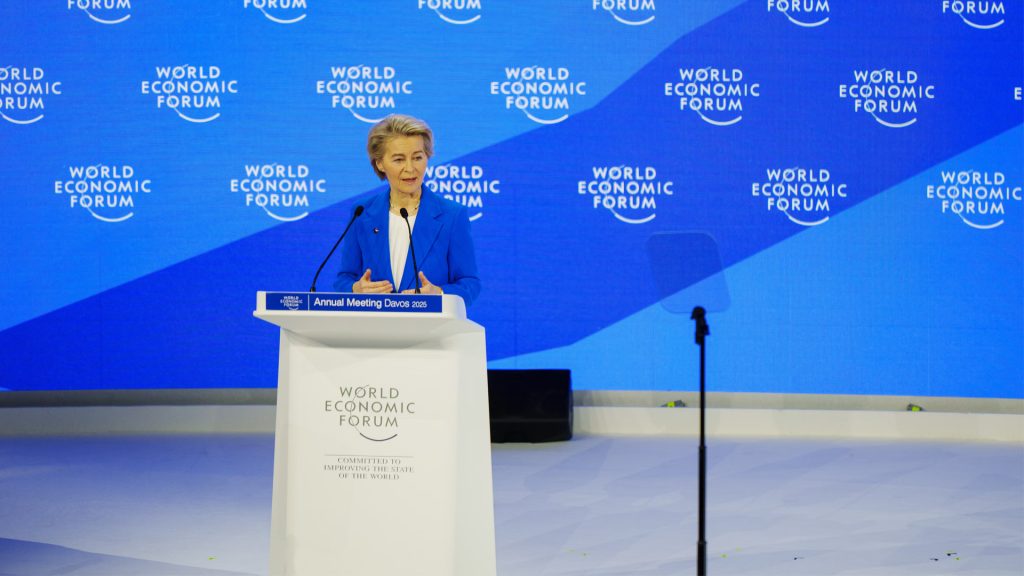
After many years being somewhat overlooked at EU level, the large potential of geothermal energy has started to be recognised by policymakers in Brussels. European Commission President Ursula von der Leyen highlighting geothermal at the World Economic Forum in Davos and the commitment of EU Energy Commissioner Dan Jørgensen to come forward with a Geothermal Action Plan are clear signs.
This development is the result of an increased awareness among many players in the sector that geothermal must step up its policy work at EU level if it wants to be seen at equal footing with other renewables. To learn more about the state of EU policies on geothermal and what it will take for lobbying efforts to create tangible results, we spoke with Malte Nyenhuis, Head of EU Affairs at Innargi.
What is your opinion on how geothermal is being represented in the EU energy policy agenda?
When I joined Innargi almost two years ago, a political momentum in favour of geothermal was starting to build up. Consequently, the European Parliament, the European Council of the Region, the European Economic and Social Committee and the EU Council in 2024 all called on the incoming European Commission to present a Geothermal EU Action Plan – the first ever EU policy document focused on geothermal – alongside strategies on Heating & Cooling and Electrification.
This momentum was to a large extent triggered by the changing energy policy context: While fighting climate change remains high on the EU agenda, energy security as well as stable and affordable prices have become the top priorities. Policymakers across political parties have started to understand that geothermal energy as a local renewable and 24/7 available source can significantly contribute to all three goals.
However, the first challenge is to keep this positive momentum throughout 2025. It is mainly a year of strategies and agenda setting for the new European Commission and European Parliament. Many other stakeholders are trying to push their issue in the political narrative leading up to the legislative proposals for the so-called “post-2030 framework” which should ensure that the EU will meet its 2040 climate target currently under discussion. As geothermal we must make sure that we are seen as indispensable part of the solution across Europe.
And secondly, while it is very positive that an EU Geothermal Action Plan has been announced, it is not yet carved in stone that it will be a fully fledged document in its own right or rather a footnote to the Heating & Cooling and Electrification strategies. The geothermal sector needs to translate it’s often technical and academic expertise into concrete policy messages and proposals which fit the current political debates about EU’s competitiveness and security while continue to increase its visibility in Brussels.
What are the biggest opportunities and challenges for scaling geothermal district heating across Europe?
Overall, the biggest driver for the large-scale uptake of geothermal energy are the EU climate and renewable targets which require the stepwise phase-out of fossil fuels in district heating. This is complemented by country-specific circumstances. In Denmark, for example there is an increasing awareness of the negative implications of biomass, e.g. import dependencies, price variability and questions regarding its sustainability. With our projects in Poland, we understand that using the countries own resource and air quality improvements rank very high.
However, despite the huge potential in many European cities to replace fossil fuels in the existing district heating system or to newly connect customers with individual oil and gas boilers like our project with Vestforbrænding will do in Greater Copenhagen, barriers remain that also EU can help to overcome.
In all our markets we experience very high public acceptance based on early on and open communication with local stakeholders and citizens. At the same time, permitting procedures and timelines differ a lot within but also between countries. This is partly due to a lack of experience with geothermal projects, different national mining laws that were often not made with geothermal in mind with a risk of different interpretation, and EU legislation which is handled differently e.g. on the environmental impact assessment.
Political support from the EU level is a helpful first step to make the national and local decision makers more aware of geothermal. More could be done at EU level with regard to easier access to subsurface data as a key tool for de-risking investments, guidelines and possible geothermal-specific rules for permitting and by opening and better recognising geothermal and the modernisation and expansion of district heating in the various EU funding tools.
From an industry perspective, what is missing in Brussels for geothermal to thrive?
Already in 2019, when Ursula von der Leyen presented the EU Green Deal, it was about fighting climate change by transforming the EU into a modern, resource-efficient and competitive economy. As described above and looking at the Draghi report, this objective has become even more important even though some of the wording has changed.
For geothermal to be part of this, it means that the sector needs to bring across its relevance across the EU as well as its business case in terms of attracting private investments and contributing to EU’s policy objectives. That is why Innargi has hired me as Brussels representative: To increase the visibility and to make sure that developers and operators have a seat at the policy table.
The good thing is that geothermal is very versatile: It can be shallow or deep, and it has a lot of applications from electricity and heating to storage and critical raw materials. However, this often results in fragmented and not necessarily very loud voices.
How do you see the role of EGEC evolving – and why is developer engagement critical?
To be heard and give concise input to EU policy makers, a strong and more consolidated voice of the sector building on concrete project and business experience is needed. The European Geothermal Energy Council (EGEC) as the long-standing and recognised association is well placed to live up to this task. However, speaking from my experience with other major EU energy associations this requires a structured integration and coordination of members views. That’s because the European Commission, when drafting policy documents or legislation, wants very concrete input based on the real-life experience from companies.
Compared to the utilities sector and other renewables, there are hardly any larger or even big players active in geothermal. And if so, it is very small part of their overall business if we look e.g. at Engie or EnBW. That is why Innargi has been active in Brussels since very early on to bring market knowledge as well as technical and economic feasibility insights to the table. And that is why EGEC needs to have a strong voice that includes the project implementation and business-driven perspectives.
Has Innargi faced some unexpected challenges in engaging at the EU level?
Politics depends on a lot of external factors, and you never know what might suddenly happen which will impact the policy agenda. This is what I like a lot about my job. But politics also goes in circles, people come and go as do issues. For this reason, we constantly must educate people about geothermal and to push for it to be on the agenda.
Another key challenge is the link between Brussels and what happens in the different markets. Talking about faster permitting at EU level is one thing – everyone likes that. But how can we actually best navigate and work with the different national interpretations of EU rules (e.g., on state aid and permitting)? This is another important role of EGEC, to facilitate and foster the exchange and mutual learning of the different companies active in Europe.
The Energy Council conclusions from the end of last year and the initiatives in many EU Member States and regions show the growing openness and political will to advance geothermal energy
Any final thoughts on what it will take to strengthen geothermal role in a future decarbonized heating sector in Europe?
There is no doubt that the announced EU Geothermal Action plan together with the Heating & Cooling and Electrification Strategies are a major opportunity to accelerate and scale-up geothermal across Europe. At the same time, it is important that the EU energy and climate policy framework for the time after 2030 gives a strong signal to market players and local decision-makers for investments in geothermal. The starting point is the adoption of an EU climate target for 2040 followed by a renewables target and measures to achieve them.
Geothermal has a lot to offer for EU’s and national overall policy objectives. For policymakers to understand and be aware, concrete proposals based on close collaboration by everyone in the sector as well as progress on concrete projects all over Europe is needed. At this pivotal moment, stronger structures and voices in Brussels are key – and EGEC is central to that effort.

For a wider perspective of the current state of geothermal in Europe, including research, projects, and policy support, make sure to register for the upcoming European Geothermal Congress, taking place in Zurich, Switzerland on 6-10 October 2025.