HS Orka commissions seventh geothermal unit at Svartsengi
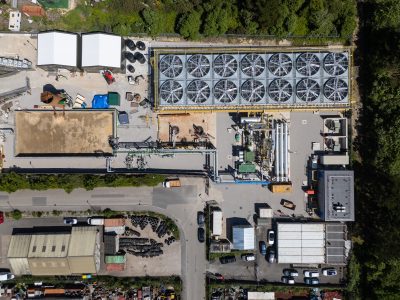
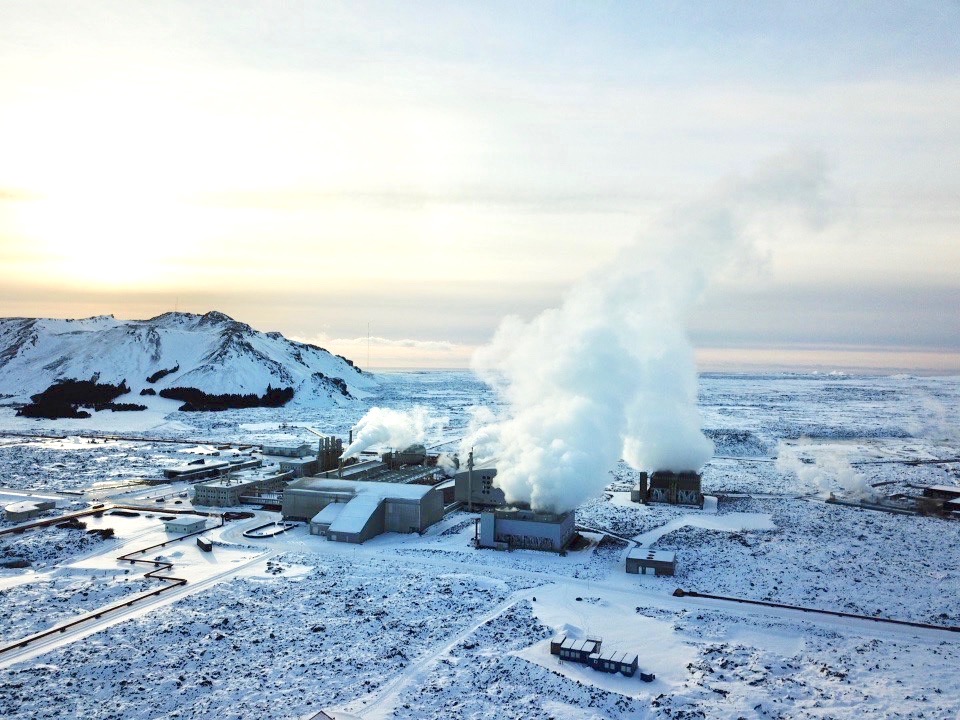 Svartsengi geothermal power plant prior to the volcanic outbreak, Iceland (source: ThinkGeoEnergy)


 Alexander Richter
1 Dec 2025
Alexander Richter
1 Dec 2025
HS Orka has commissioned a new 55 MW unit at Svartsengi, replacing older units and increasing capacity despite volcanic challenges on the Reykjanes peninsula.
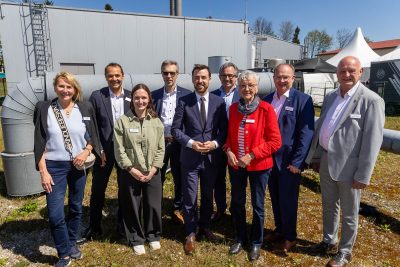
Icelandic energy company HS Orka formally launched the seventh power unit at the Svartsengi geothermal plant during a ceremony attended by Jóhann Páll Jóhannsson, Minister for the Environment, Energy and Climate of Iceland and industry representatives at the plant near Keflavik, Iceland. The new 55 MW turbine is the largest steam turbine currently in operation in Iceland.
Ground was broken for the project at the end of 2022. Construction stayed on schedule despite repeated volcanic activity on the Reykjanes peninsula over the past two years. HS Orka said the expansion and associated upgrades represent an investment of more than ISK 14 billion (about USD 110 million).
Replacing older units and strengthening heat supply
The new unit replaces two older plants at Svartsengi. The project also delivered substantial upgrades to equipment linked to the company’s hot water production. With this phase completed, electricity production capacity at Svartsengi now reaches around 63 MW, an increase of roughly one third.
Tómas Már Sigurðsson, CEO of HS Orka, said the project marks an important milestone for the company. “Given the volcanic activity on the Reykjanes peninsula during the construction period, building this new plant while keeping to all schedules is a remarkable achievement. Everyone involved, from contractors and consultants to HS Orka staff, deserves great credit for this outcome.”
Construction under challenging geological conditions
Earthquakes and eruptions along the Sundhnúkur crater row affected the project throughout construction. Since November 2023, nine eruptions have taken place in the area. Gas emissions repeatedly limited access, and the work site was closed for about four months between November 2023 and March 2024.
HS Orka highlighted the close cooperation with civil protection authorities and emergency teams as essential for maintaining progress and completing the project within its original schedule.
Contractors and delivery partners
Three main contractors delivered the project. Ístak was responsible for construction, site safety and coordination. Rafal installed electrical systems, and HD handled mechanical equipment installation.
A wide group of additional contractors and subcontractors supported the work. The plant was designed by Verkís and OG Architects, with Strendingur overseeing project and construction management. Lota programmed the control systems, and Ellert Skúlason ehf. carried out excavation and groundworks. The turbine and generator were supplied by Fuji, whose specialists were present on site throughout the year.
At peak periods up to 120 staff from HS Orka and partner companies worked at the Svartsengi site.
Potential for further expansion
According to the Icelandic Planning Agency, the expansion did not require a full environmental impact assessment. HS Orka received a new utilisation and power licence in 2022 for production of up to 85 MW at Svartsengi. This allows room for future capacity increases as long as the geothermal resource remains sustainable.
Svartsengi is Iceland’s first combined geothermal heat and power plant. Development began in 1976 and the facility has now been built in seven phases over more than four decades.
With this expansion, overall geothermal power generation capacity in Iceland jumped to 808 MW.
Source: Company release