GEL achieves double first for UK with geothermal electricity and zero-carbon lithium production
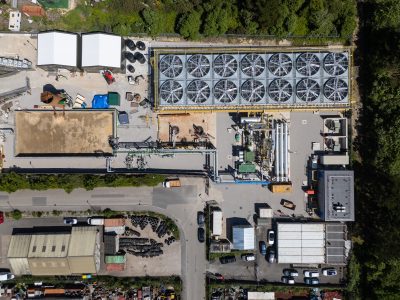
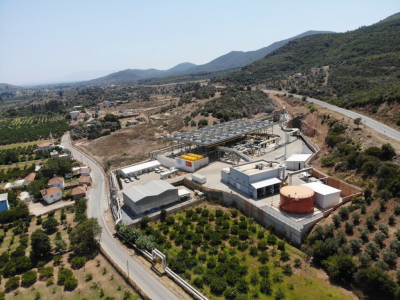
 The United Downs geothermal power plant in Cornwall, UK (source: GEL)


 Carlo Cariaga
26 Feb 2026
Carlo Cariaga
26 Feb 2026
With the switching on of the geothermal power plant in United Downs, the UK now has its first operation geothermal power plant and geothermal lithium facility.
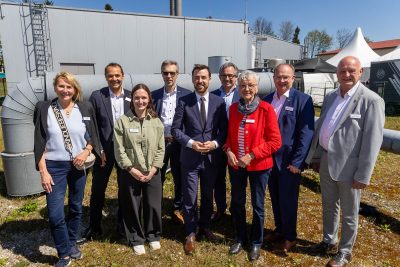
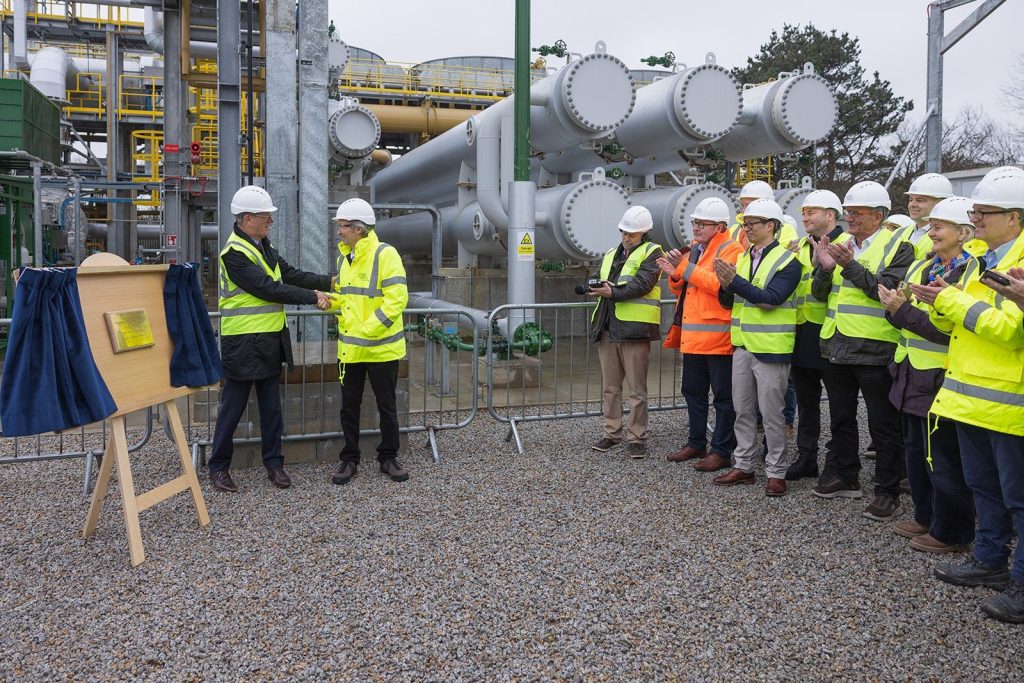
Geothermal Engineering Ltd (GEL) has just completed two unprecedented achievements in the UK – the first operational geothermal power plant, and the first commercial-scale geothermal lithium carbonate plant. A switching on event was held at the United Downs site in Cornwall to commemorate this milestone in the history of sustainable energy and critical minerals in the UK.
“We are proud to be at the forefront of this landmark step for the UK, generating electricity and lithium by harnessing the resources beneath our feet. This is a huge advancement for geothermal power in the UK and the beginning of our expansion plans,” said Dr Ryan Law, CEO of GEL.
“Geothermal energy and critical minerals extraction are naturally complementary as they share the same subsurface resource. The hot, mineral-rich fluids that generate clean electricity can also be processed to recover strategic materials like lithium carbonate. Therefore, co-locating power and mineral extraction plants maximises investment in the wells, minimises subsurface disruption and accelerates the transition to secure domestic supply in both critical sectors. The United Downs plants prove we can do this in a way that benefits the climate, communities, and the economy.”
Power plant technology that fits the UK geothermal setting
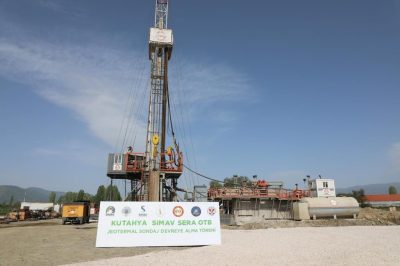
The power plant is supplied by a pair of geothermal wells, one of which is the deepest and hottest ever drilled in the UK, at over 5000 meters depth and greater than 185 °C. The United Downs plant was developed in partnership with Exergy International, the Italian technology provider behind over 500 MW of operational geothermal capacity worldwide.
The Organic Rankine Cycle (ORC) power plant supplied by Exergy has a 3 MWe gross capacity and uses the highly efficient Radial Outflow Turbine to produce electricity using the heat of the geothermal fluid. The condensing system is air-cooled, and thus avoids water consumption. It also does not release vapor into the atmosphere and has minimal visual impact and a small footprint.
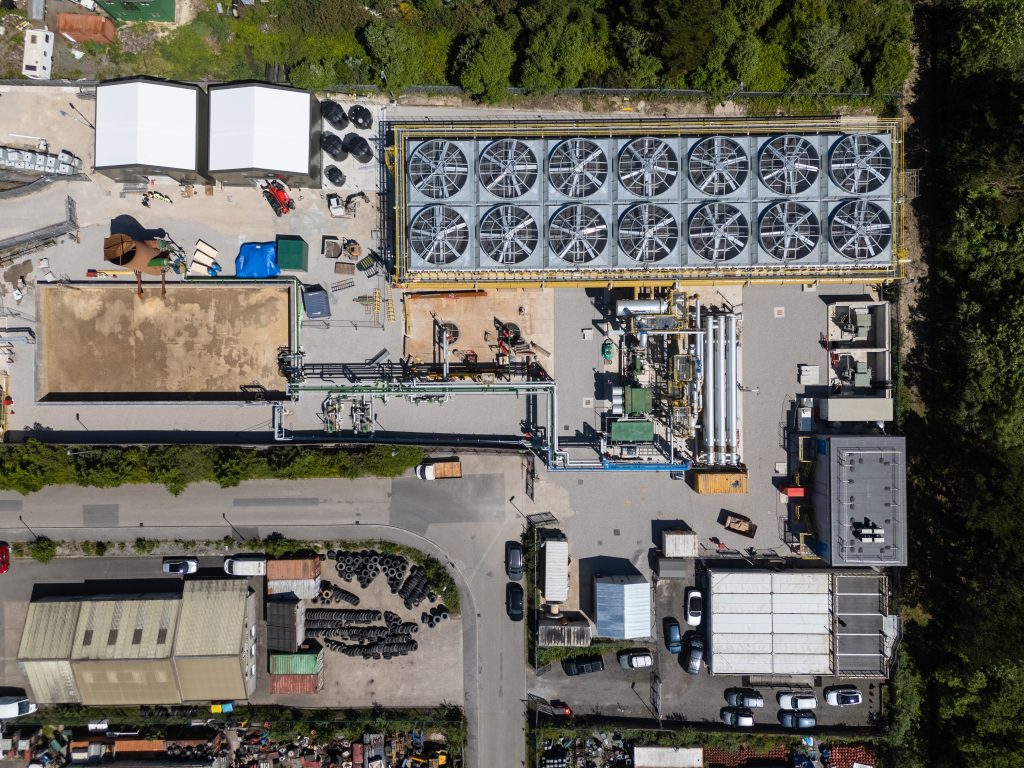
ORC power plant technology is perfectly suited to the low to medium-temperature geothermal resources in the UK, as explained by Exergy Sales Manager for Geothermal, Giacomo Menghetti. It is also flexible to different power output sizes, from 300 kW to 50 MW, allowing it to serve different market requirements.
“In addition, our experience in managing all surface facilities, from the wellhead valve to reinjection, enables us to provide the optimal solution for each specific application,” further explains Menghetti.
Power generated from the Cornwall geothermal power plant will be purchased by Octopus Energy under a 3-MW Power Purchase Agreement (PPA). This will be enough to supply 10,000 homes.
“Bills are still too high, and the answer is more homegrown, renewable energy. For the first time, we’re bringing deep geothermal power to British homes – a clean, constant energy source right beneath our feet,” said Greg Jackson, Founder of Octopus Energy.
GEL has two other deep geothermal sites currently under development in Cornwall which will deliver a further 10 MW of base-load geothermal power in the UK by 2030.
Lithium production from geothermal brine
In another UK first, GEL has started commercial scale production of zero-carbon lithium carbonate, the key raw material used in the production of rechargeable batteries, including those that power electric vehicles and
energy storage systems.
From its February 2026 starting point, the GEL facility has the capacity to produce 100 tonnes of lithium carbonate per annum.
After power generation, the fluid is processed to extract battery-grade lithium carbonate before being reinjected underground in a closed loop. The water brought to the surface contains over 340 parts per million (ppm) of battery-grade lithium carbonate equivalent (LCE) making it one of the highest concentrations of lithium in the world.
GEL aims to scale its production to over 18,000 tpa over the next decade, enough for circa 250,000 EV batteries a year, or 65% of the UK’s 2024 Battery Electric Vehicle (BEV) registrations.
“The UK’s first ever geothermal power is a groundbreaking moment for UK energy innovation, powering thousands of homes with clean, homegrown power. With zero carbon lithium now being produced here in the UK, British businesses are leading the way in securing the materials needed to power the next generation of electric cars,” said Dr Alan Whitehead, Minister of State in the Department for Energy Security and Net Zero.
Multiple victories for the UK
The start of operations of the United Downs geothermal power plant is a win for the UK across several fronts. It provides a new sources for domestically sourced baseload power. This reduces reliance on imported fuel sources to balance wind and power, thus introducing better grid stability.
The project also secures a domestic lithium supply to support the UK automotive sector and meets the 2027 Rules of Origin requirements. Geothermally-sourced lithium drastically reduces the carbon footprint of battery storage. Lastly, geothermal power generation provides both clean power benefits and more stability in power prices for British households.
“Geothermal represents a compelling opportunity to drive economic growth while advancing systemic decarbonisation and advancing the energy transition. With rapid expansion underway across Europe and multi gigawatt onshore potential in Great Britain, the UK has a clear opportunity to scale a secure, always-on source of domestic renewable heat and power,” said Jason Cheng, CEO of Kerogen-CX.
We at ThinkGeoEnergy have followed closely the progress of the United Downs geothermal project since its early years in 2011. Our congratulations goes to the team at Geothermal Engineering Ltd. for finally getting this project across the finish line and making history for the geothermal sector of the UK.
Source: Email correspondence