France’s Court of Auditors cites structural obstacles slowing down geothermal growth
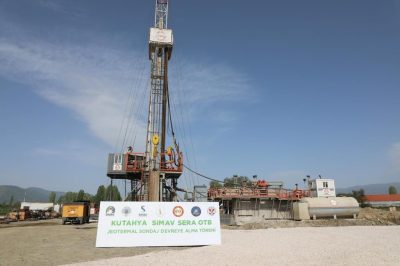
 Drilling rig_on site at Bonneuil-sur-Marne, Paris, France (source: GPC IP)


 Carlo Cariaga
20 Jan 2026
Carlo Cariaga
20 Jan 2026
A recent report by the Court of Auditors of France identifies structural obstacles for geothermal growth and call for a review of regulation and funding.
The Court of Auditors (Cour des comptes) of France has released a new report that looks into the degree of public funding support that the geothermal sector in France has received, and evaluates the obstacles that need to be overcome to reach the sector’s 2030 targets.
The geothermal sector in France has received significant public funding support in 2024 – EUR 123 million for deep geothermal energy, and EUR 110 million for shallow geothermal energy. Despite these numbers, geothermal energy still only represents 1% of the final heat consumption in France.
The report distinguishes between three categories of geothermal energy:
- Shallow geothermal energy, based on shallow boreholes and suitable for individual homes and small dwellings and buildings, produced around 4.7 TWh of heat and cooling in 2023
- Deep geothermal energy, tapping subsurface aquifers for heating network,s produced around 2.3 TWh of heat in 2023
- Deep geothermal energy for electricity generation had marginal production of 0.1 TWh.
Further emphasizing the slow growth of the sector is the substantial gap between current production numbers and ambitious targets. For shallow geothermal energy, the goals call for the tripling of heat production by 2035. Deep geothermal has a target of 6 TWh by 2030.
The report identifies several obstacles that are holding back the sector, both for shallow and deep geothermal. For shallow geothermal, growth prospects rely less on increased subsidies but on the easing of regulatory constraints on drilling, and the development of organizational and legal tools to facilitate investment profitability. Deep geothermal is also held back by slow administrative procedures, but has to deal with economic constraints because of very high initial investments and uncertainties regarding geological resources.
The potential for power generation from deep geothermal in mainland France is limited, partly because of the history of seismicity in the Alsace region. However, the Bouillante geothermal power plant has provided an exemplary model in the Caribbean region. To harness further potential in these territories, the Court recommends revisiting the systems for covering drilling risks in these regions.
Recommendations from the report
To facilitate growth in shallow geothermal, the Court recommends raising the threshold for “geothermal energy of minimal importance” from the current 500 kW to 2 MW. This is a proposal is already under review, as it has been cited the list of concrete measures announced by the Ministry of Energy and Industry last year.
The Court recommends re-examining the role of financial support for deep geothermal for heating, particularly the Heat Fund which has subsidized between 3 to 5 projects per year. To meet the targets, the pace of implementation must be significantly increased with the aim of commissioning between 6 and 10 geothermal doublets per year by 2030. According to the estimates of the Court, , this would require an annual subsidy level for heat production and distribution between EUR 96 million to 200 million.
Other financial instruments can also be considered, especially in the context of the observed profitability of deep geothermal projects. For instance, a heat fund assistance can be provided as a repayable advance, subsidized loan, or equity investment. The resources of the Banque des Territoires can be used for this purpose.
The report also notes that the lack of knowledge of the subsurface slows down project development due to uncertainties related to the resource. Under the current framework of the Mining Code, geological data from project developers are kept confidential for ten years, with the exception of certain date collected by the French Geological Agency (BRGM). Discussions are now underway with project developers to facilitate faster data sharing, although the report notes that some have expressed reservations.
Source: Cour des comptes