EU facility opens EUR 3bn for clean heating programmes
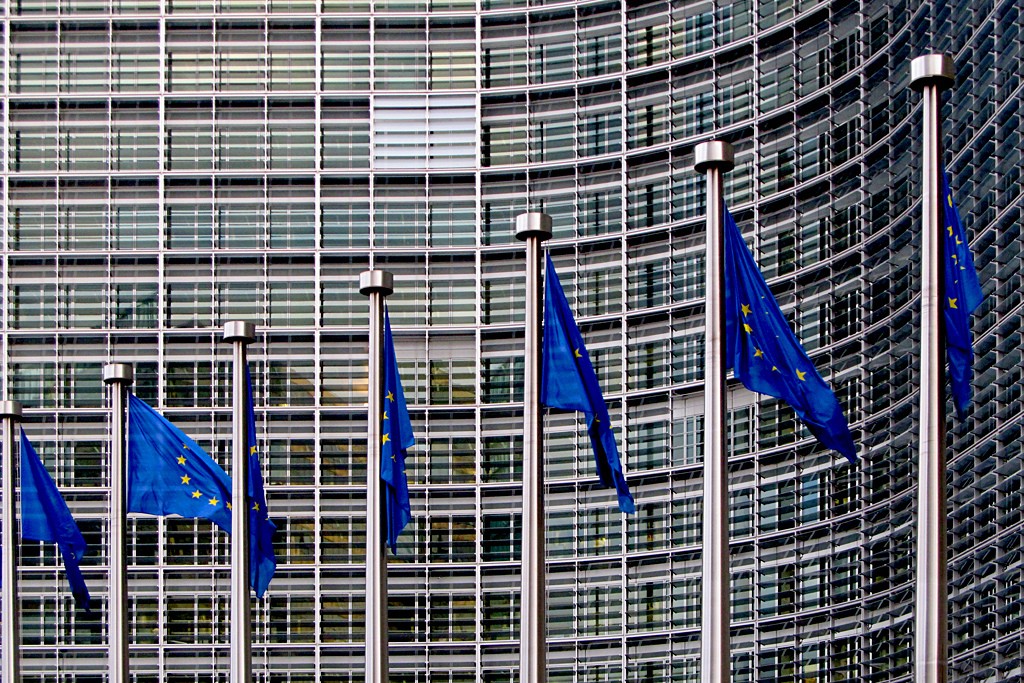 EU Commission, Brussels (source: flickr/ Andrew Gustar, creative commons)


 Alexander Richter
5 Feb 2026
Alexander Richter
5 Feb 2026
The EU’s EUR 3 billion ETS2 Frontloading Facility targets clean heating programmes, opening a pathway for geothermal heating within social and building decarbonisation schemes.
The European Investment Bank (EIB), together with the European Commission, has launched a new EUR 3 billion “ETS2 Frontloading Facility” aimed at accelerating investments in cleaner heating and cooling and reducing energy demand in buildings and road transport ahead of the new emissions trading system for buildings and transport, ETS2, which starts in 2028.
Announced in early February, the facility is designed to help Member States pre-finance decarbonisation programmes that deliver direct benefits to low- and middle-income households. Rather than supporting individual infrastructure projects, the mechanism focuses on national and local programmes that reduce fossil fuel dependence, lower energy bills, and mitigate social impacts linked to carbon pricing.
Within this framework, geothermal energy does have a role. But it is a specific one, and it differs markedly from how geothermal projects are often financed.
What the ETS2 Frontloading Facility is designed to do
The core purpose of the facility is to unlock early investment in sectors that will be covered by ETS2, notably buildings and road transport. By providing EUR 3 billion in frontloaded funding through the EIB, the EU aims to help Member States implement measures before carbon pricing increases costs for households.
The emphasis is on:
- cleaner heating and cooling solutions,
- reduced energy demand through renovation,
- and affordability for vulnerable and middle-income groups.
The facility is closely aligned with the objectives of the Social Climate Fund and with national Social Climate Plans, which Member States must prepare to address distributional impacts of ETS2.
Where geothermal heating fits the scheme
Geothermal energy is relevant under the facility not as a standalone energy project, but as a clean heating vector embedded in broader building decarbonisation and social-support programmes.
Several geothermal applications align well with the facility’s intent.
Building-level geothermal and ground-source heat pumps
Shallow geothermal systems and ground-source heat pumps can be supported when deployed at scale in residential buildings, including single-family homes, apartment blocks, and small commercial buildings. The strongest fit is where these systems are bundled with renovation measures such as insulation and efficiency upgrades, reducing overall energy demand rather than simply switching fuels.
Programmes targeting low- and middle-income households are particularly relevant, as geothermal heat pumps can offer stable operating costs and reduced exposure to fossil fuel price volatility.
Geothermal-based district and networked heating
District heating networks that use geothermal energy as a main or anchor heat source are another strong candidate. This includes geothermal-fed systems serving residential districts, social housing, schools, hospitals, and other public buildings.
In this context, geothermal can be framed as a way to provide long-term, low-carbon heat while stabilising heating costs for consumers. The social benefit is central: projects need to demonstrate that households benefit directly through lower or more predictable bills.
Socially driven geothermal renovation programmes
The facility is particularly suited to programmatic approaches. Examples include municipal or national schemes that roll out geothermal heating solutions across social housing portfolios or public building stock.
Here, geothermal is part of a wider policy package that combines renovation, clean heat, and social protection. This directly matches the facility’s objective of making clean solutions affordable and accessible for citizens.
Who actually accesses the funding
A critical point for geothermal developers and suppliers is that the EUR 3 billion facility is not accessed through open calls for individual projects.
Instead, the primary counterparties are Member States that have transposed ETS2 and can work with the EIB to pre-finance eligible programmes.
In practice, this means several layers of actors.
Member State governments
Ministries responsible for finance, energy, climate, or housing design national programmes that include clean heating and efficiency measures. These programmes are embedded in Social Climate Plans and financed in part through the EIB frontloading facility.
Geothermal technologies become eligible where they are explicitly included as approved clean heating options within these programmes.
Public banks and implementing agencies
National promotional banks, energy agencies, or similar public bodies often act as intermediaries. They receive EIB-backed funding and translate it into grants, soft loans, or blended finance instruments for households, building owners, or municipalities.
These entities are the formal EIB clients and play a key role in determining which geothermal solutions are supported in practice.
Regional and local authorities and municipal utilities
Cities and municipalities, frequently through their district heating companies or public utilities, can benefit directly from the facility when geothermal heating projects are part of approved national programmes.
The justification rests on social impact, particularly for residential buildings and public infrastructure serving vulnerable groups.
Social housing providers and ESCO-type structures
Public or not-for-profit housing companies, as well as energy service companies running retrofit programmes, can access support indirectly through national schemes.
For geothermal projects, this often means acting as technology providers, EPC contractors, or ESCO partners in programmes where tariff structures and contracts demonstrate clear benefits for tenants.
What this means for geothermal developers
Independent geothermal developers are unlikely to apply directly for funding under the ETS2 Frontloading Facility. Instead, their role is to position geothermal heating projects so that they fit within Member State programmes financed by the facility.
This may involve partnering with municipalities, social housing providers, district heating operators, or public banks. It also requires framing geothermal not only as a low-carbon technology, but as a tool for reducing energy demand, stabilising costs, and delivering social benefits.
For geothermal heating, the message from Brussels is clear. Success under ETS2-linked instruments will depend less on individual project economics and more on how geothermal is integrated into policy-driven, socially targeted decarbonisation programmes.
As Member States finalise their Social Climate Plans and implementation mechanisms, geothermal actors who understand this logic will be best placed to benefit from the EUR 3 billion now being mobilised.
Source: EU Commission