Denmark blessed with “enormous geothermal potential”, yet how much can be used?
 GEUS geothermal map database (screenshot, via data.geus.dk/geoterm/)


 Alexander Richter
3 May 2020
Alexander Richter
3 May 2020
A new survey of the subsurface in Denmark shows enormous amounts of geothermal energy. It must be utilized in the green transition, so researchers and the Danish District Heating organisation.
The Danish subsoil contains so much geothermal energy that it can in principle cover half of Denmark’s heating needs. That is shown by a new survey by researchers from GEUS, the Department of Geosciences and Natural Management at the University of Copenhagen and the Department of Geoscience at Aarhus University, according to the media Videnskap.dk.
The mapping is based on many years of research and provides the first detailed overview of the Danish underground. It shows that the potential for geothermal extraction is greater than previously assumed. And that’s a good news for climate-ambitious Denmark.
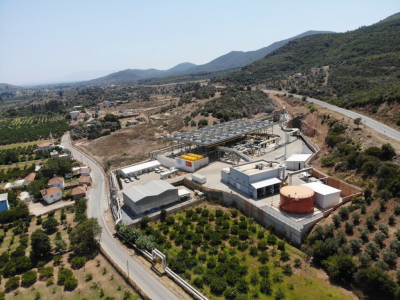
The map of GEUS can be seen on GEUS’ Web GIS Portal, also showing the three geothermal heating plants currently in operation at Thisted, Sonderborg and Margretheholm/ Amager (within the municipality of Copenhagen, the capital of Denmark).
“One can easily imagine that some of the big urban areas can benefit from geothermal energy. The advantage of geothermal energy is that hot water is produced, whether it is blowing or the sun is shining, so it is a really renewable energy source,” says geologist and associate professor of Ph.D. Lars Ole Boldreel from the University of Copenhagen, who is one of the researchers behind the project, to Videnskap.dk.
The conclusion is completely in line with the message from the Danish District Heating. Geothermal energy must play a far greater role in the future of green district heating. Geothermal energy currently accounts for only 0.1 percent of the total Danish renewable energy.
Political action must fulfil the potential
As fossil fuels phase out until 2030, when the district heating sector will be CO2 neutral, other green energy sources must play a far more prominent role in the production of green heat – including geothermal energy.
That is why Jesper Koch, head of analysis at the district heating industry’s Think Tank Green Energy, is also pleased that we now have even better evidence that geothermal belongs to the future.
“Danish District Heating has long recommended that we put a push on the development of geothermal energy, which may be the next Danish energy adventure. Now research shows that the potential is even greater than previously thought, and it only adds new fuel to that desire,” he says.
Danish District Heating has a number of recommendations for politicians and policy makers on the development of geothermal energy. The potential is great, but to realize it also requires a willingness to set framework conditions that will support investments in the energy form.
This includes funding for the construction of two Danish large-scale plants, that large heat pumps on geothermal plants are exempt from tax, as well as facility support, so that Danish district heating companies can adapt their local distribution network to geothermal energy.
“Geothermal energy can replace biomass in the longer term and will give a whole new dimension to the Danish energy mix that will be indispensable – also seen from an even longer perspective, where Denmark in 2050 must be climate neutral. That is why there is also a need for further development,” says Jesper Koch.
Geothermal plants already exist in Thisted, Sonderborg and Amager (, while Aalborg Municipality has approved the plan for a 100 MW geothermal plant, which will help phase out the coal at the North Jutland plant. Aarhus Municipality has also partnered with A.P. Moller Holding to investigate the possibilities for ten geothermal plants.
Source: Danks Fjernvarme