Declining market price for power a growing concern for the geothermal sector in Türkiye
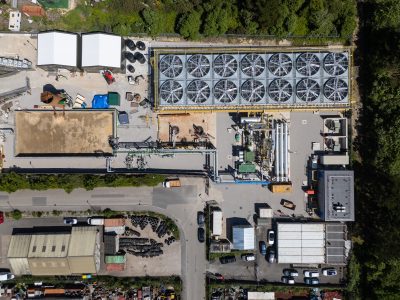
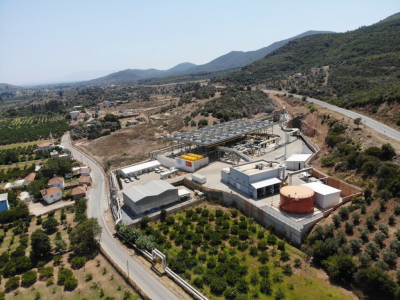
 OME T-01 Geothermal Power Plant, Alasehir, Turkiye (source: JESDER)


 Carlo Cariaga
7 Apr 2026
Carlo Cariaga
7 Apr 2026
Amidst falling power prices in Türkiye, JESDER is proposing a ceiling and floor price structure to maintain the commercial viability of geothermal power plants.
The steady drop of the Power Transmission Fee (PTF) in Türkiye is posing significant economic risks, particularly for geothermal power plants providing baseload generation. In this context, the Geothermal Power Plants Investor Association (Jeotermal Elektik Santral Yatirimcilari Dernegi / JESDER) published a press release detailing the economic pressures being faced by the geothermal sector and proposes solutions.
According to the press release, the PTF in Türkiye has been steadily and significantly declining in the past years. The figures are as follows:
- 112.18 USD/MWh in March 2023
- 68.71 USD/MWh in March 2024
- 59.11 USD/MWh in March 2025
- 36.81 USD/MWh in March 2026
When this trend is viewed from the perspective of geothermal power plants, it can be said that the observed decline does not bode well for the sector. he decline in PTF means that geothermal power plants will sell the electricity they produce at a lower price. This increases revenue pressure, especially on plants that are outside the Renewable Energy Support Mechanism (YEKDEM), have ongoing financing burdens, or high operating costs.
A fragile economic ecosystem for geothermal power
Geothermal operators also have to deal with high operating costs. According to the statement, the share of operating costs in the total investment cost of geothermal power plants is approximately 6%, while this rate is around 2-3.5% for wind power plants and 1-1.5% for solar power plants. This makes the geothermal power sector more sensitive to falling market prices.
While a drop in prices might appear to mean cheaper electricity from the outside, it creates a much more fragile economic balance at the power plant level. The plant continues to operate and supply energy to the system, but the same production level no longer generates the same level of income. In other words, a technically functioning facility may not be able to remain commercially viable with the same ease.
A prolonged period of low market prices naturally reduces investor appetite. This is because investors want to see not only the current price but also what level of revenue will be generated in the coming years. When prices are weak, new well investments, capacity increases, or decisions to build new power plants become more cautious. On the other hand, this situation also creates more pressure on existing power plants to increase efficiency.
A price structure that reflects the value of geothermal power
Ultimately, the issue is not just low market prices, but the insufficient reflection of the true value that geothermal energy brings to the system in the revenue structure.
What is needed is not artificially raising prices, but establishing a more balanced and robust framework that does not weaken domestic and continuously producing resources, and strengthens revenue diversification, efficiency, and investment appetite. Otherwise, low prices, which seem advantageous today, may turn into a more fragile picture tomorrow in terms of investment deficiencies and supply security.
In this context, it is important for the Ministry of Energy and Natural Resources and the Energy Market Regulatory Authority (EPDK) to consider a ceiling/floor price application for the post-YEKDEM period. The YEKDEM scheme provided a more secure income structure and was instrumental in the impressive growth of the Turkish geothermal sector during the 2010-2020 period.
Geothermal power plants whose YEKDEM support period has ended are facing serious financial difficulties in the current market structure, where they continue to sell their electricity at the PTF but have to deal with high operating costs, chemical expenses, currency fluctuations, and increasing investment and renewal costs. Today, a significant portion of the facilities whose support period has ended are struggling economically with current market prices, and in some cases, are even operating at a loss. This situation not only threatens the sustainability of existing power plants but also makes it difficult for investors to pursue new investments.
Therefore, for power plants whose YEKDEM period has expired, the creation of a maximum/minimum settlement price range linked to the PTF but limiting excessive revenue volatility could be considered. Such a mechanism, rather than providing direct support, could offer an indirect and balanced framework to protect the sustainable operating conditions of the power plants.
This proposed measure would contribute to the continued operation of facilities commissioned between 2010-2020, whose support period has now ended, and could also create a more predictable and reliable environment for new investments. In conclusion, such a regulation would both support the financial viability of existing power plants and contribute to the preservation of the long-term investment climate in the geothermal sector.
Source: Email correspondence via our Turkish language platform JeotermalHaberler