The history and development plan for the Copahue geothermal project, Argentina
 Copahue geothermal project, Argentina (source: ADI-NQN SEP – Neuquén Investment Agency)


 Carlo Cariaga
12 Mar 2026
Carlo Cariaga
12 Mar 2026
An initial 10 MW of development is being targeted at the Copahue geothermal project in Argentina, but social license and financing remain challenging.
In a conversation following GEOLAC 2026 , geologist Carlos Esteban and Leandro López, president of ADI-NQN SEP – Neuquén Investment Agency, discussed the status and characteristics of the Copahue geothermal project, considered the most advanced geothermal development in Argentina.
A technically validated resource
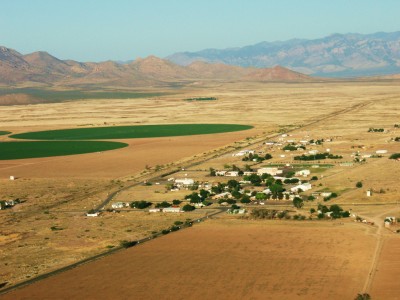
The Copahue Geothermal Project is located in the “Las Mellizas de Copahue” area of Neuquén Province in Argentina. The geothermal field is located on the northeast flank of the Copahue Volcano, 2 km from Copahue and 14 km from Caviahue, within the Copahue Protected Natural Area. The mining concession (1108.59 ha) belongs to ADI-NQN and is registered in accordance with the Mining Code.
The geothermal resource in Copahue consists of a high-enthalpy (>230°C) steam-dominant reservoir with stable temperatures around 235°C, hosted in fractured lavas of the Cola de Zorro Formation. It is only one of several geothermal sites in Argentina that have indicated good development potential.
Exploration began in 1973. Between 1981 and 1998, four deep wells (COP I to COP IV) were drilled, all with productive results. Well COP IV reached flow rates of approximately 50 t/h. Between 1988 and 1995, a 0.67 MW pilot plant, the first of its kind in South America, operated. In 1992, a technical and economic feasibility study defined a development potential of 30 MW.
With drilled wells and history of pilot operations, the technical feasibility of developing the Copahue geothermal project has already been proven. The challenge now lies in socio-environmental management and securing a financing scheme.
Development plan and challenges for Copahue
The current plan proposes an initial modular development of 10 MW, with the possibility of future expansion up to 30 MW. The design incorporates condensing cycle technology (with a binary cycle alternative) and a 90% capacity factor. The estimated generation for the initial module is 78.8 GWh/year, equivalent to supplying approximately 26,000 homes, with an estimated reduction of 34,690 tons of CO2 per year.
The project includes the drilling of two new production wells (~1500 m), possible reconditioning of a well for reinjection, construction of a plant, transformer substation and 33 kV underground line (9 km) to the Caviahue Transformer Station.
The project has already secured an environmental permit for surface exploration. However, approval of the Environmental Impact Assessment (EIA) for drilling is still pending due to intervention by the Protected Natural Areas authority. The main challenge at present is obtaining social license, due to opposition from local sectors and the presence of indigenous communities in the area.
The total estimated investment for the initial 10 MW stage is USD 46.1 million.
-
Social management: USD 16,000
-
Drilling (2 wells): USD 13.65 million
-
Plant construction: USD 28.25 million
-
33 kV transmission line: USD 4.17 million
The estimated cost per kW installed is USD 4.607/kW.
Source: Direct correspondence via our Spanish platform PiensaGeotermia