Octavia Carbon: Direct Air Capture as an enabler of geothermal growth in Kenya
 Octavia Carbon: Direct Air Capture as an enabler of geothermal growth in Kenya


 Carlo Cariaga
6 Oct 2025
Carlo Cariaga
6 Oct 2025
Octavia Carbon is pioneering Direct Air Capture in Kenya, mobilizing investment on a new industry while also providing reliable offtake for geothermal power.
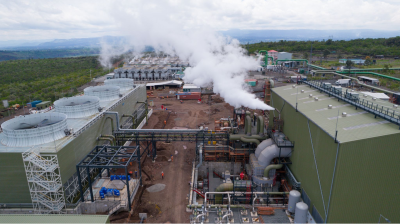
The installed geothermal power generation capacity of Kenya has increased steadily over the past years, but issues related to surplus renewable generation and a shortage of large, steady offtakers still remain. The Kenyan Government has made efforts to bridge the gap between supply and demand, leveraging the availability of geothermal power supply to attract investors and large-scale industries to the country.
One such candidate for a reliable offtaker of geothermal energy is Octavia Carbon. The company is pioneering Direct Air Capture (DAC) in Kenya, generating carbon removal for global buyers while also utilizing both heat and power from nearby geothermal facilities. To learn more about the business model and future plans of Octavia Carbon, we spoke with Head of Commercialisation Diana Maranga and Communications Manager Specioser Mutheu.
Kenya as the ideal site for carbon capture
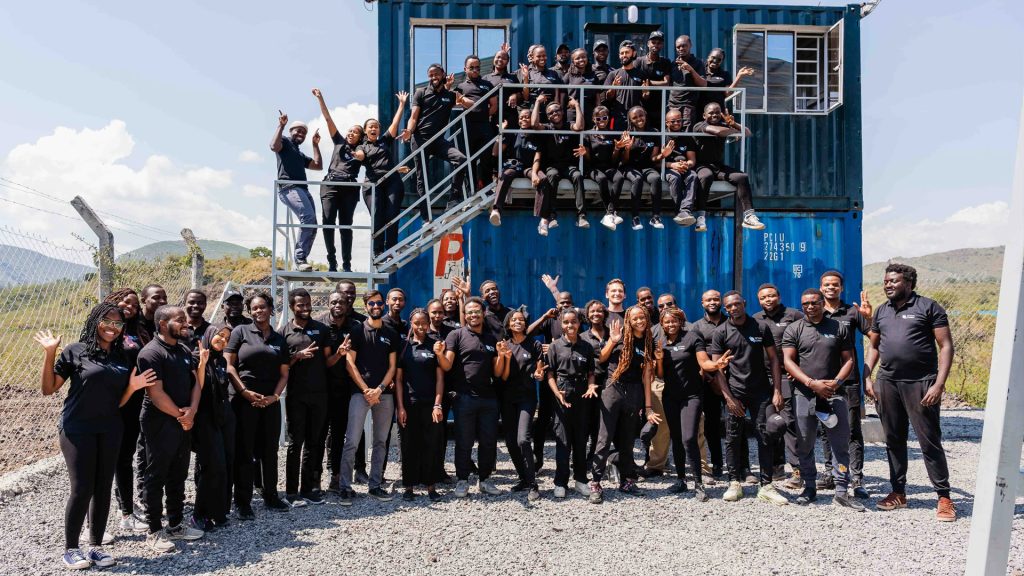
Octavia Carbon was c0-founded in June 2022 by Martin Freimüller and Duncan Kariuki after relocating to Kenya on the conviction that the country uniquely combines the “three solid ingredients” required for DAC: the right talent base, suitable geology to store captured CO2, and reliable renewable energy, specifically geothermal. From that start, the team has grown to about 60 people focused on designing, building, and deploying DAC machines in Kenya, with the pilot located along the Kenyan Rift Valley near Gilgil, roughly a few hours from Nairobi.
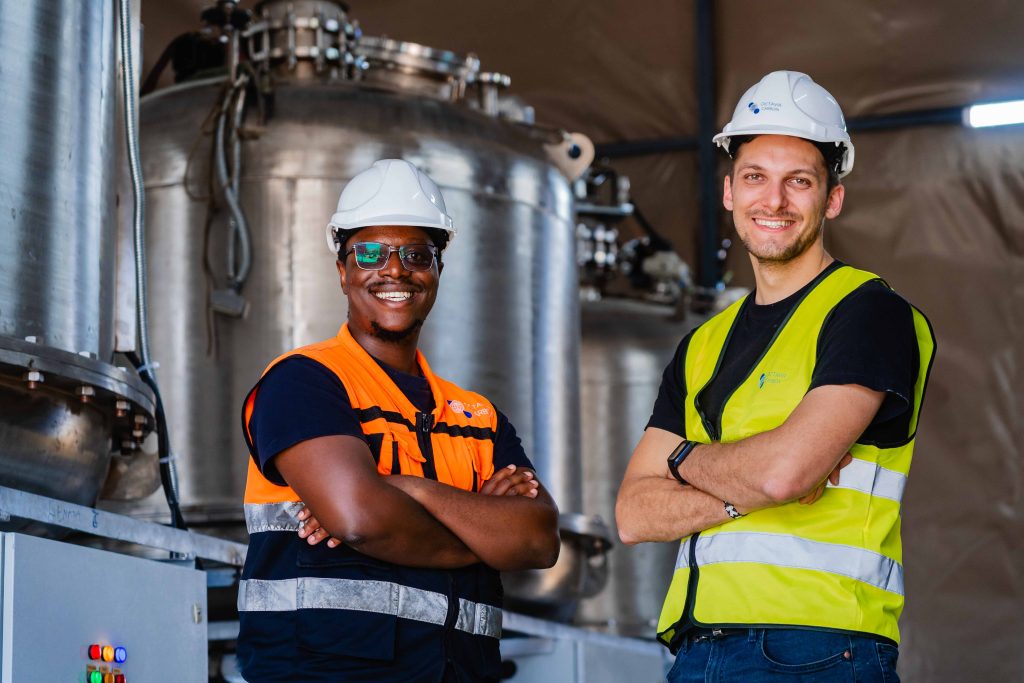
The technology is engineered to integrate with geothermal energy to meet the bulk of its heat and power needs, embedding the company’s founding thesis as Kenya being the optimal place to prove DAC at scale.
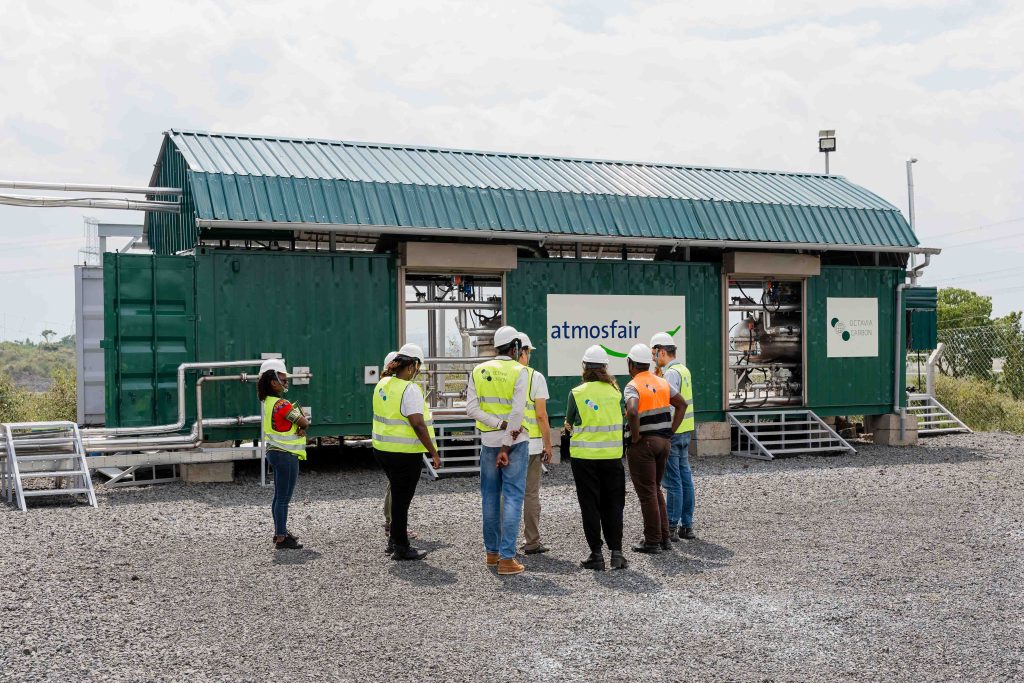
Geologically, Kenya’s Rift Valley offers permeable volcanic formations where injected CO2 can mineralize into stable carbonates, achieving the long-term permanence buyers increasingly require. A live demonstration of this model is already underway: atmosfair’s DAC unit at Lake Elementaita, operated with Octavia’s technology, is capturing CO2 today and is slated to scale from an initial tens of tonnes per year to around a hundred tonnes annually by 2026, with Puro.earth verification of removals.
On the human capital side, Kenya benefits from decades of investment in STEM education and a mature geothermal ecosystem anchored by state-owned and private operators. That concentration of know-how helps shorten learning curves for installation, operations, and maintenance. It also supports domestic fabrication, refurbishment, and iterative design that are significantly harder to achieve when hardware has to be imported.
Working towards a pilot project by 2026
Octavia’s pilot, Project Hummingbird, is designed to validate technology, operations, storage pathways, and credit issuance at meaningful scale. The company shared a phased plan: late-2024 Phase 0 field commissioning deployed four modular units to stress-test deployment and operations; Phase 1 begins commercial rollout and verification outreach; Phase 2 ramps toward mid-hundreds of tonnes before reaching full output by end-2026.
At full scale, Hummingbird targets ~1,500 tCO2/yr gross, with ~1,000 tCO2/yr net removals sold after on-site energy/process deductions. A subsequent larger-scale development is aimed at ~10,000 tCO2/yr, translating to ~100,000 tonnes over a ten-year life.

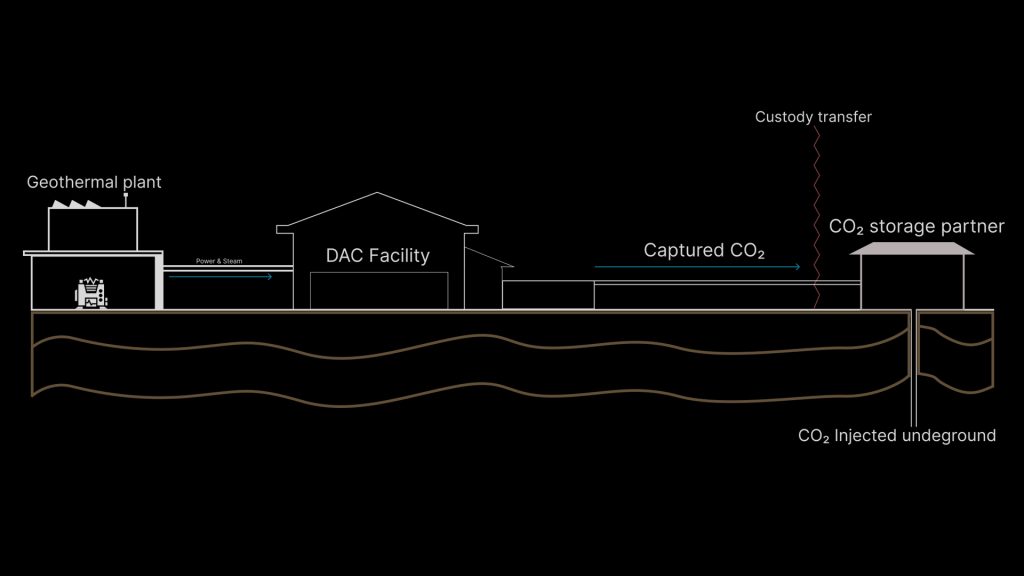
Octavia will source 100% geothermal energy from Mumbi Ltd., a private concession holder in a special economic zone. The expected operating blend is 80% heat and 20% electricity. This profile dampens exposure to power-price volatility, thus making baseload offtake predictable for the heat supplier. It also offers a template for other potential projects in the Rift Valley: co-located DAC drawing contracted heat and power “inside the fence,” with minimal CO2 transport to injection.
Kenya’s first public DAC installation provides complementary learning. At Lake Elementaita, atmosfair’s unit (developed by Octavia) is already capturing and aims to ramp from ~25 tCO2/yr per reactor module to ~100 tCO2/yr at site level by 2026, with storage in local basalts and verification via Puro.earth. That real-world MRV cadence supports Hummingbird’s plan to commence “commercial/injection” operations during its early ramp while verification workflows scale.
Carbon capture as a catalytic investment
Octavia relies on a blended stack of financing – equity (primarily African VCs), small grants directed to R&D, and carbon-finance prepayments that function as catalytic capital, or cash advanced by buyers ahead of delivery of the credits. The company has signed with a mixed client base in the technical and financial sectors, citing Carbonfuture, the Milkywire Climate Transformation Fund (procuring for Klarna and the Wilde Foundation), and Terraset among recognizable counterparties. Prepayments from such partners accelerate module orders, site works, and MRV build-out.
External reporting adds scale and credibility. Reuters states Octavia has ~$3 million in carbon-credit contracts, around 50% prepaid, and a storage agreement with Cella Mineral Storage, positioning Kenya to be the second country after Iceland to inject air-captured CO2 underground as soon as next year. Milkywire’s project page likewise frames Octavia as the Global South’s first DAC firm leveraging Kenya’s geothermal and geological storage advantages.
For Hummingbird specifically, the phase plan and capacity trajectory provide the “bankability narrative” credit buyers and impact investors need: near-term verified tonnes from a live ecosystem (Elementaita), a pilot ramp to ~1,000 net tCO2/yr by end-2026, and a line of sight to ~10 ktCO2/yr projects thereafter. That stepwise scaling matches market evolution, avoiding overbuild while locking in a reputation for timely, audited delivery.
Enabling geothermal growth in Kenya
Kenya already sources the majority of its power from renewables, with geothermal recognized more and more for its weather-independent, baseload characteristic. With plenty of geothermal resource already confirmed, the challenge now is providing demand certainty for its development. Developers and lenders want creditworthy, around-the-clock offtakers to underwrite new wells, plants, and interconnections.
Octavia’s DAC plants are designed to be that offtaker, providing steady heat and power demand that aligns with geothermal’s strengths. In our interview, the team tied this to Kenya’s green-industrialization agenda: moving from roughly 90–93% renewable electricity toward 100% will require energy-hungry industries such as data centers and carbon removal to absorb supply that can otherwise go underutilized. DAC also adds a climate dividend by exhibiting verified CO2 removals that bring foreign revenue into the energy system.
The atmosfair–Octavia project at Lake Elementaita shows how this can scale in practice. Geothermal energy runs DAC modules, captured CO2 is mineralized in local basalts, and a third-party standard verifies issuance. Replicated across multiple concessions, the model would create industrial baseload anchored in geothermal while building a domestic carbon-services supply chain.
That virtuous circle turns each incremental MW of geothermal into both clean electricity and high-integrity removals, improving utilization, lowering system costs over time, and ultimately making the next geothermal project easier to finance. Octavia presents an innovative model for empowering a DAC business while also facilitating the growth of the local geothermal sector.