Kenya’s road to World Geothermal Congress 2029: Winning the bid and what comes next
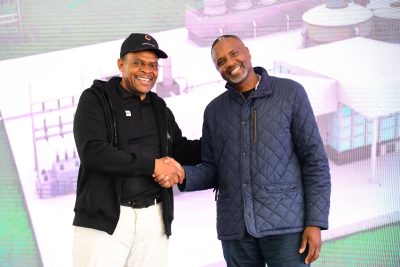
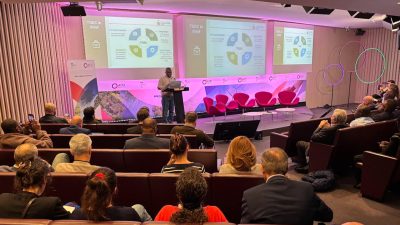
 Gathuru Mburu of GAK speaking at the celebration event of Kenya's successful WGC 2029 bid (source: KenGen)


 Carlo Cariaga
6 Feb 2026
Carlo Cariaga
6 Feb 2026
Through strong stakeholder support and an Africa-centered campaign, Kenya has made a successful bid to host the World Geothermal Congress in 2029.
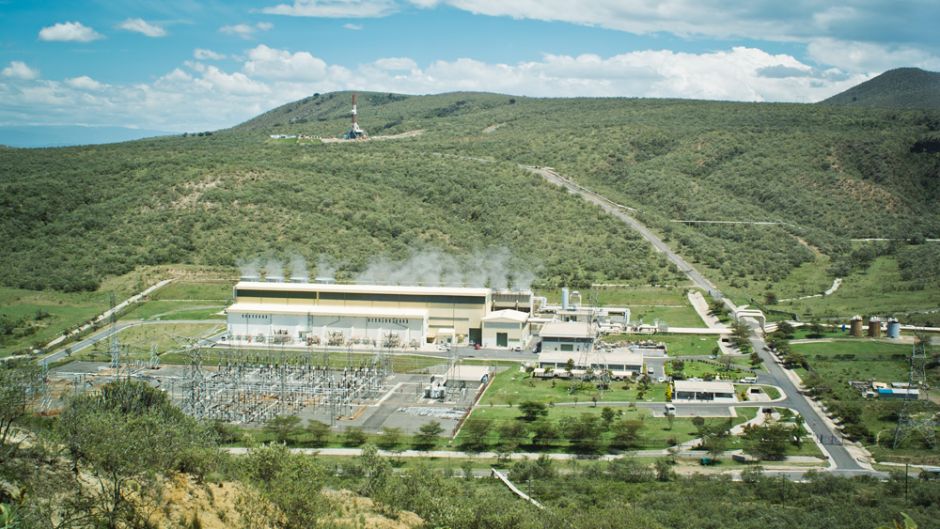
Before 2025 ended, the announcement was made that Nairobi, Kenya had been selected to host the 2029 edition of the World Geothermal Congress. The selection was the perfect validation of Kenya’s success in geothermal growth in the past decades. From the first geothermal power plant in Olkaria in 1981, Kenya is set to surpass the 1-GW threshold of installed geothermal power capacity later this year.
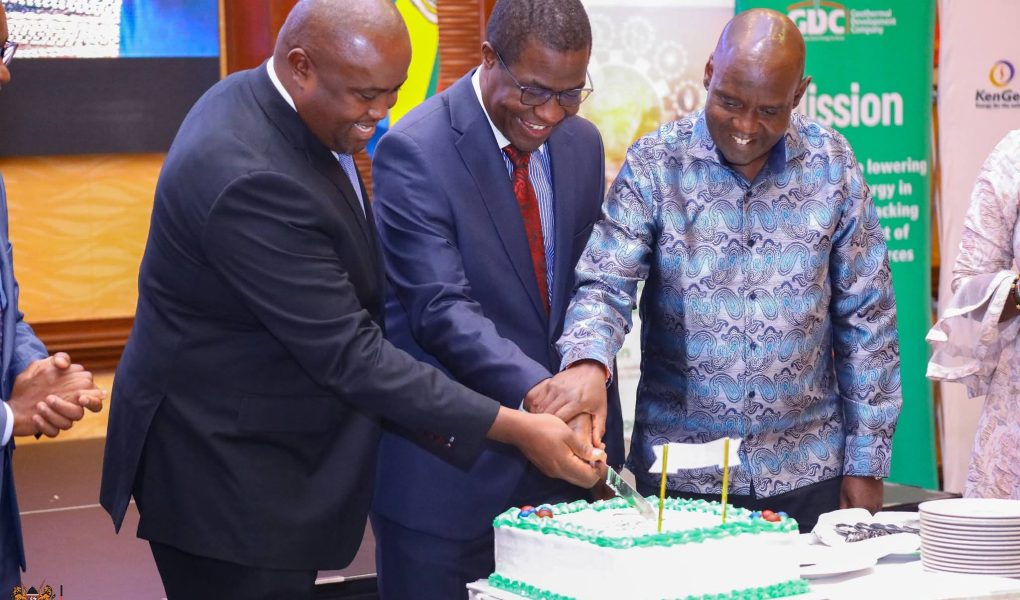
Shortly after the announcement, a celebration was held in Nairobi to commemorate the win. In attendance were representatives from government agencies and private corporations, all of whom played important roles in making the bid to host WGC 2029. Of note were the Cabinet Secretary, Ministry of Energy and Petroleum, Hon. Opiyo Wandayi, Mr. Alex Wachira, PS, State Department for Energy, and Mr. John Ololtuaa, PS for the State Department of Tourism.
Kenya’s WGC 2029 bid strategy
During the event, Gathuru Mburu of the Geothermal Association of Kenya (GAK) gave a speech detailing the steps that the collective Kenyan delegation took to win the bid for WGC 2029. Founded in 2010, the GAK is the national umbrella body representing the various stakeholders across Kenya’s geothermal sector. With the support of the GAK Board of Directors, the bidding committee crafted a well-planned and well-executed bidding strategy that brought home the result that Kenya aspired for.
The following points provide a succinct summary of the winning strategy that the bidding committee deployed to great success.
Building a broad movement of stakeholders
As Mburu said, the first thing the bidding team did was to “build a movement.” This started with securing the support of the Ministry of Energy and Petroleum. The Kenya bid was even supported by Ethiopia Electric Power (EEP), who had initially made a competing bid for WGC 2029. However, once Ethiopia did not make the short-list of candidates, EEP gave its full support to Kenya.
Securing local and international endorsements
Aside from getting the support of local players, GAK also sought to secure endorsements from geothermal players outside Africa. Geothermal Rising, the geothermal organization representing the United States, responded to their call.
Crafting a strong African-centered brand
As part of the bid, the committee created a brand that represented not just Kenya, but the whole of Africa. As the regional leader in geothermal growth, a win for Kenya was also going to be a win for the whole African region. Thus, the tagline: “Discover the beauty and power of Africa.”
The tagline also emphasized that the WGC experience was going to be beyond the technicalities of the conference. It was also going to highlight the beauty of Africa – the landscape, the wildlife, the people, and the energy and passion that the whole experience will offer.
Clear, professional, and all-encompassing communications
As Mburu recalled, the bid committee was asked to provide one big document as part of the bid requirements. This document has hundreds of pages and provided all technical and financial aspects of holding the event. However, the committee thought, “How many people, executives, or board members would sit down to read hundreds of pages?”
The solution was to create a short and impactful slide presentation, as well as a 1.5-minute video package that summarized the strong points of the bid with all the enticing imagery.
Executing a well-planned evaluation visit
The bid committee had to demonstrate that they could coordinate and execute on plans. The evaluation visit from the representatives of the International Geothermal Association (IGA) provided the perfect opportunity for it. “We only gave them time to sleep. The rest of the time, they will not have time to think of any other country or continent,” remarked Mburu.
The team made sure that the program for the evaluation visit will be planned and executed to the smallest detail. One particular challenge was taking the evaluation team from Nairobi to Naivasha in just one hour, as the committee wanted them to visit the Olkaria geothermal field. The solution was to mobilize air transport, making it possible to reach Naivasha from the Wilson Airport in Nairobi in only 20 minutes.
Negotiating a fair and credible MoU
A crucial step of the bidding process was the Memorandum of Understanding (MoU) signed between GAK and IGA. It took two weeks of rigorous negotiation led by the legal team of the GAK to negotiate a framework that is fair, balanced, and transparent. Mburu noted that IGA was not going to give Kenya the win without some form of assurance that the promises they put on paper will be delivered.
Guaranteeing strong government alignment
Mburu emphasized the importance of a “broad-based leadership” in the successful initiative. This meant that the movement was not just led by the GAK, but also by the Government of Kenya through its different agencies. The bid received strong support from both the Ministry of Energy and Tourism, as well as the Ministry of Tourism.
As Mburu recalled, it was the Principal Secretary of Energy Alex Wachira who encouraged GAK to go beyond the Kenya Geothermal Congress (KGC) and work towards a bid for WGC 2029. Appreciation was also expressed for Cabinet Secretary for Tourism Rebecca Miano, who had played an important role in the growth of geothermal capacity in Kenya in her previous role as Managing Director and CEO of KenGen.
Mobilizing public and private sector support
Mburu mentioned public sector groups including KenGen, GDC, KETRACO, and Kenya Power as important supporters of the WGC 2029 bid. The movement also received support from private players, notably Atlas Copco and SLB.
Focusing beyond winning
The bidding committee framed a win for Kenya as more than just determining the host for the next WGC. It was going to be the catalyst for the next wave of geothermal investments, thus ushering a new age of geothermal development in Kenya and the whole of Africa. The forward-looking vision strengthened the bid
What is next now for Kenya? Before WGC 2029, the delegation will first have to establish strong presence at the upcoming World Geothermal Congress taking place on June 2026 in Calgary, Canada. An African Pavilion will bring together all African organizations and companies in the exhibition space. There will also be numerous representatives delivering technical talks, further exhibiting the technical prowess and expertise of the region.
The next big win, as Mburu said, is executing WGC 2029 flawlessly. In closing his speech, Mburu called on the support of the whole sector. “We need each one of you. Let us remain organized. Let us remain strategic. Let us remain ambitious.”