KenGen and Kaishan break ground on geothermal-powered green fertilizer facility in Kenya
 Kaishan MD Dr Yan Tang and Kenyan President William Ruto at the groundbreaking ceremony for the geothermal green fertilizer facility in Naivasha, Kenya (source: KenGen Kenya via Twitter)


 Carlo Cariaga
3 Nov 2025
Carlo Cariaga
3 Nov 2025
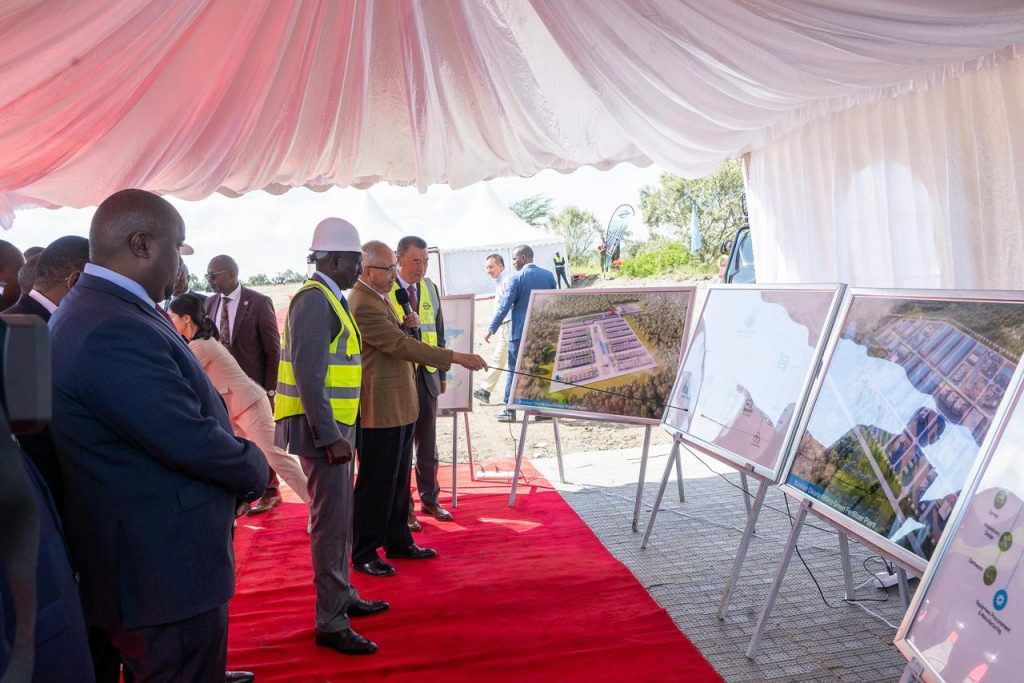
A groundbreaking ceremony was held for the geothermal-powered green fertilizer facility to be built by Kaishan in Naivasha, Kenya.
KenGen and China’s Kaishan Group have officially broken ground on the construction of a geothermal-powered green fertilizer production facility in Naivasha, Kenya. This follows up on a geothermal steam supply agreement signed between the two parties a week ago.
The project aims to use geothermal steam to power the production of green ammonia and fertilizer. This serves the purpose of reducing carbon emissions while also reducing the dependence of the Eastern African region on imported fertilizers. The agreement states that KenGen will supply steam from the Olkaria geothermal field to the 165-MW facility to be built and operated by Kaishan through local subsidiary Kaisan Terra Green Ammonia Limited. The contract duration is 30 years.
The plant is expected to produce between 200,000 to 300,000 tonnes of green fertilizer annually. It is forecast to avoid more than 600,000 tonnes of carbon dioxide emissions per year. It will also deliver about USD 13 million in annual net profits to KenGen.
Italian firm Steam Srl has been selected as the Owner’s Engineer for the project, further strengthening their position in Kenya’s geothermal space. Last year, Steam had been assigned a similar role for a project that aims to use geothermal power for cement manufacturing, supplied by geothermal steam from the Menengai field.
Stabilizing fertilizer prices in East Africa
“This project shows that Kenya is not just a leading producer and consumer of clean energy, we are now going further to add value and generate prosperity from it,” said Kenya’s President William Ruto during the groundbreaking ceremony.
“Our agriculture is highly dependent on fertilizer prices with high prices leading to decline in maize output nationally. As we know, maize is the staple crop that feeds millions of Kenyans. That is why domestic, competitively priced fertilizer matters not just for commerce, but for food security for our people.”
Beyond stabilizing fertilizer prices, Ruto also stated that the project will generate over 2000 direct and indirect jobs in construction, operations, maintenance, supply chain, and other services. It provides a career pipeline for electricians, engineers, plant operators, lab technicians, and local suppliers. It will also make Kenya the first nation in Africa to industrialize fertilizer production entirely using renewable energy.
Source: KahawaTungu and KenGen via Twitter