What a Stanford study reveals about EGS and clean grids
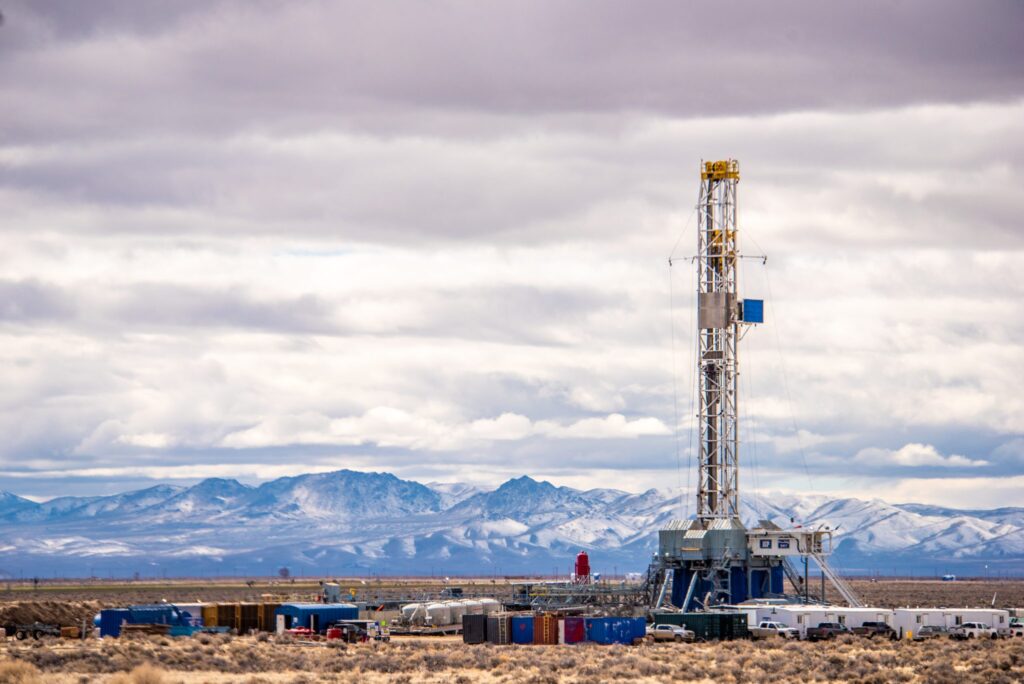 Drilling rig at the site of Project Red, Nevada (source: Fervo Energy)


 Alexander Richter
5 Feb 2026
Alexander Richter
5 Feb 2026
A Stanford study explores how adding EGS reshapes 100% renewable power systems, reducing land use and infrastructure while supporting clean, firm energy.
Enhanced geothermal systems, or EGS, are often discussed in terms of drilling costs, seismic risk, or how quickly projects can scale. A new modeling study from Stanford University takes a different angle. Instead of asking whether EGS is cheap enough on its own, the researchers ask what happens to an entire clean-energy system when geothermal is part of the mix.
The answer is nuanced and, for the geothermal community, quietly encouraging. The study suggests that EGS may not dramatically lower the headline cost of a 100% renewable energy system, but it can make that system smaller, more compact, and easier to build. In a world where land use, permitting, and public acceptance increasingly shape energy outcomes, that difference matters.
What EGS is, in practical terms
Enhanced geothermal systems expand the reach of geothermal energy beyond the familiar volcanic and hydrothermal hotspots. Instead of relying on naturally occurring hot water and steam, EGS uses deep drilling to access heat stored in hot, relatively dry rock several kilometers below the surface. Engineers create or enhance pathways in the rock and circulate water to bring that heat back to the surface.
The result can be continuous electricity generation, district heat, or both. Because temperature at depth is far more widespread than conventional geothermal reservoirs, EGS opens the door to geothermal development in many regions that were previously considered unsuitable.
In grid terms, EGS behaves very differently from wind and solar. It runs around the clock. In the Stanford study, it is treated as firm baseload power, supplying a steady share of electricity rather than fluctuating with weather or daylight.
What the Stanford study actually did
The research team modeled a transition for 150 countries to a 100% wind-water-solar (WWS) energy system across all sectors. That includes electricity, transport, buildings, and industry, assuming near-full electrification of end uses.
In all scenarios, wind and solar dominate electricity supply. Conventional geothermal and solar thermal are used for remaining non-electric heat needs. The key comparison is between systems with no EGS and systems where EGS supplies about 10% of total electricity as baseload power.
To reflect uncertainty, the study explores three EGS cost cases: low, mid, and high. The question is not whether EGS replaces wind and solar, but how it reshapes the system around them.
Costs: not the headline, but still important
One of the study’s most interesting findings is that adding EGS at a 10% electricity share has relatively little impact on the total cost of a fully renewable energy system.
In the low-cost EGS case, both private energy costs and broader social costs are lower when EGS is included. In the mid-cost case, total costs are broadly similar with or without geothermal. In the high-cost case, costs increase when EGS is added.
The takeaway is not that EGS automatically makes clean energy cheaper. Rather, the study shows that even if EGS is not a cost winner on paper, it does not undermine the economics of a 100% renewable system. That is a meaningful result in itself.
More striking is the broader context. Whether or not EGS is included, transitioning to a 100% WWS system reduces annual private energy costs by around 60% compared with today’s fossil-based systems. When health and climate damages are included, total social energy costs fall by roughly 90%. EGS operates within that already dramatic shift.
How EGS changes the shape of the energy system
Where EGS really stands out is in how it changes the structure of the system.
Because geothermal provides firm, continuous output, the total nameplate capacity required across the entire energy system falls when EGS is included. Less wind, less solar, and less storage are needed to achieve the same level of reliability.
Land use declines as well. With EGS in the mix, the total land area required for energy infrastructure is lower than in a wind- and solar-only system. For large countries this may seem marginal. For small or densely populated countries, it can be decisive.
The study also finds that total jobs in the WWS energy system decrease when EGS is included. This is not because geothermal is a job-destroyer, but because the system as a whole becomes more compact, with less overbuilt capacity and less land-intensive infrastructure. It is a structural effect, not a judgement on employment quality or regional impacts.
Why system value matters more than LCOE
A recurring theme in the paper is that technologies like EGS should be evaluated at the system level. Looking only at levelized cost of electricity misses what firm resources do for the grid.
EGS acts as a stabilizing anchor. By supplying around 10% of electricity continuously, it reduces the need to oversize wind and solar fleets and to build large amounts of storage to cover rare but critical low-generation periods. Even if total costs barely change, the system becomes simpler.
This perspective is particularly relevant for countries where land availability, public opposition, or grid complexity limit how far wind and solar can scale. In those contexts, a smaller, more compact system may be easier to permit and deploy than a theoretically cheaper but sprawling one.
What this means for the geothermal community
For geothermal developers and policymakers, the study offers a reframing. EGS is not presented as essential for achieving low-cost clean energy. Wind and solar can already do much of that heavy lifting. Instead, geothermal emerges as an optimization tool.
In practical terms, EGS can help make 100% renewable systems more manageable. It reduces land requirements, trims excess capacity, and provides firm power without emissions. For small and densely populated countries, these attributes may matter as much as cost.
The findings also suggest that geothermal should be discussed not only in national resource terms, but in system-design terms. Where space is limited or public acceptance is fragile, EGS could play an outsized role even at modest penetration levels.
Challenges remain, but the direction is clear
The study does not gloss over uncertainty. Real-world EGS costs could land anywhere along the low-to-high range explored in the model. Continued progress in drilling, reservoir creation, and long-term performance will be critical if EGS is to consistently deliver system benefits.
Policy design matters too. Many energy markets still reward the cheapest kilowatt-hour rather than firm, clean capacity or reduced land use. If the system-level benefits identified in the study are to be realized, planning and market frameworks will need to value them explicitly.
A different role for geothermal in the energy transition
The Stanford analysis does not claim that EGS will dominate future power systems. Instead, it suggests a quieter but potentially influential role. Geothermal may not drive the biggest cost reductions, but it can help shape cleaner energy systems that are smaller, more compact, and easier to live with.
For an industry often framed as niche or location-specific, that is a shift worth paying attention to — and a reason to take a closer look at the study itself.
Source: Stanford University