Study examines the potential for geothermal cooling in Hawaii
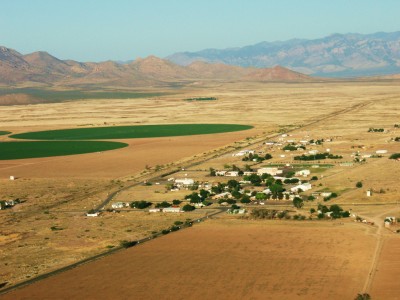
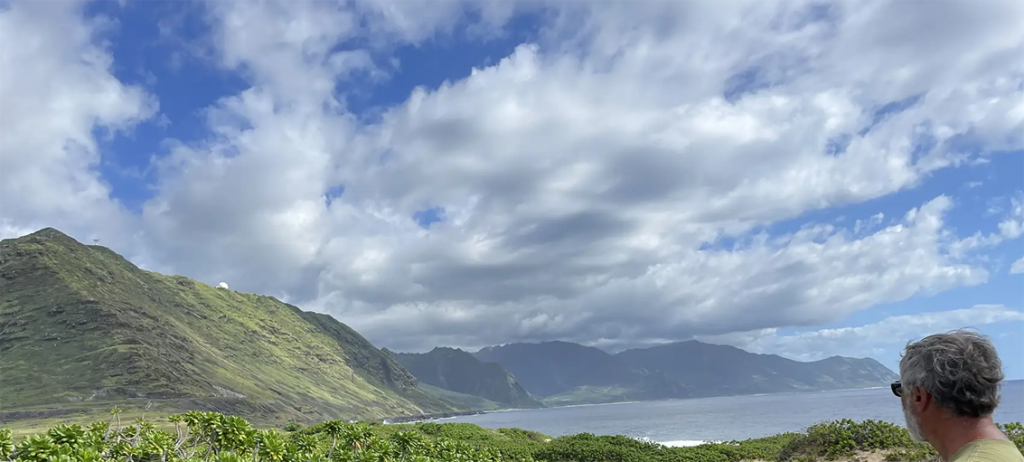 Keana Point in Oahu, Hawaii (source: Christine Doughty, Lawrence Berkeley National Laboratory)


 Carlo Cariaga
10 Dec 2025
Carlo Cariaga
10 Dec 2025
A study shows that geothermal cooling with GHEs has potential in Oahu, Hawaii with large groundwater circulation considered as a major enabling factor.
A study done at the Hawaii Groundwater and Geothermal Resources Center at the University of Hawaii at Manoa looks into the possibility of deploying geothermal cooling technologies in Hawaii, coupled with shallow ground heat exchanges (GHEs). Based on a hydrogeologic model of a potential closed-loop system at the Stan Sheriff Center, ground water modeling will have to be incorporated to enable successful GHE operations for at least 10 years.
The steep terrain and highly permeable volcanic formations in Oahu provides favorable conditions for large groundwater flow, which the study shows is crucial for successful ground heat exchanger operations.
The study was done in collaboration with scientists at Lawrence Berkeley National Laboratory through the U.S. Department of Energy’s Energy Technology Innovation Partnership Project (ETIPP). ETIPP, under the management of the National Laboratory of the Rockies (formerly known as NREL), is a program that supports remote, coastal, and island communities with technical assistance and energy planning to help them build more reliable and affordable energy systems.
GHEs as an enabling technology
The study specifically focuses on using GHEs across Oahu and at a specific site in the island for geothermal cooling. Through a system of looping pipes in the shallow ground, GHEs can move heat from a warm place to a cooler place, like how a refrigerator functions.
“High-temperature geothermal, which requires deep drilling, is required to produce electricity, but low-temperature geothermal such as GHEs, which can be accessed much nearer the ground surface, can be used for building heating and cooling, greatly lessening loads on the electric grid,” said Lawrence Berkeley National Laboratory’s Christine Doughty, staff scientist.
“I believe both types of geothermal have potential to be an asset to Hawaii,” added Nicole Lautze, founder and director of the Hawaii Groundwater and Geothermal Resources Center.
In contrast to open-loop geothermal systems, closed-loop GHE systems continually circulate a heat-transfer solution through pipes, which transfers heat to and from the ground via thermal conduction. Groundwater needs to have temperatures that are low enough to effectively cool buildings, and groundwater flow in a GHE system works to remove built-up heat.
Groundwater circulation is essential for GHE systems
From the island-wide analysis, ETIPP analysis focused on the Stan Sheriff Center at the University of Hawaii at Manoa, a building with a high cooling load in an area with lots of open space surrounding it, could make a good candidate for site-specific analysis of GHE technology.
When used for cooling, GHEs would add heat to the subsurface. This means that groundwater needs to replace the heated water from the boreholes to maintain the functionality of the GHE system. This was reflected in the hydrogeologic model created for the study.
Analysis without groundwater flow showed that the GHE system may operate normally in the first year, but heat buildup would increase water temperatures significantly after that. Without groundwater circulation, there would be increased chiller demand in years two through six. Modeling that incorporated groundwater flow showed that heat would be effectively swept away from the borefield, which would enable successful GHE operation for at least 10 years. Thus, including groundwater in analysis and planning, coupled with low interest loan rates and high capital investment, may provide economic benefits to the university.
Cold seawater may be an option for cooling-source systems, the analysis concluded, and such a system already operates at the Natural Energy Laboratory of Hawaii. The report authors encouraged further study.
RELATED: Hawaii boosts geothermal exploration with state support
Source: NREL