Kamchatka quake and eruption: geothermal plants unaffected
 Krasheninnikov volcano, Kamchatka Peninsula, Russia (source: ShinePhantom, commons/ wikimedia, BY CC SA 3.0)


 Alexander Richter
4 Aug 2025
Alexander Richter
4 Aug 2025
A magnitude 7.0 earthquake and a rare volcanic eruption struck Russia's Kamchatka Peninsula, but geothermal power plants in the region remain unaffected.
A series of significant geological events hit Russia’s Kamchatka Peninsula this past week. On July 30th, a very powerful magnitude 8.8 earthquake struck off the Kamchatka coast, about 119 km east-southeast of the regional capital Petropavlovsk-Kamchatsky, as widely reported internationally.
The earthquake – the largest in Kamchatka since 1952 – triggered tsunami warnings across the Pacific, prompting evacuations as far as Japan, Hawaii, and even French Polynesia. While coastal flooding was reported in the Kuril Islands (with waves up to 5 meters in Severo-Kurilsk), Russian officials noted the quake caused no casualties thanks to robust infrastructure and alert systems. In the quake’s aftermath, Kamchatka’s most active volcano, Klyuchevskoy, began erupting – sending flows of lava down its slopes and explosions visible in the night sky. Scientists from the Russian Academy of Sciences observed that this volcanic activity, occurring roughly 450 km north of Petropavlovsk-Kamchatsky, was likely triggered by the massive tremors of the recent earthquakes.
Just a few days later, on August 3, another strong earthquake (magnitude 7.0) struck near the Kuril Islands at the southern tip of Kamchatka. Russia’s Ministry of Emergency Services briefly issued a local tsunami warning for Kamchatka’s Pacific coast as a precaution, advising residents to stay away from shores. However, the Pacific Tsunami Warning Center and the U.S. Geological Survey reported no significant tsunami threat from this quake, and the advisory was soon lifted. In the early hours following that quake, the long-dormant Krasheninnikov Volcano in eastern Kamchatka erupted for the first time in approximately 600 years. Olga Girina, head of the Kamchatka Volcanic Eruption Response Team (KVERT), confirmed that no historical eruptions of Krasheninnikov have been recorded since around the year 1460. The volcano’s sudden activity has been tentatively linked by scientists to the recent seismic upheavals. The eruption sent an ash plume soaring about 6,000 meters into the sky. Fortunately, the ash cloud drifted eastward over the Pacific Ocean with no populated areas along its path, according to Kamchatka’s emergency services ministry. An “orange” aviation alert was issued to warn aircraft of potential ash in the atmosphere. Apart from heightened vigilance, authorities reported no injuries or damage from the eruption in this remote volcanic area.
Geothermal plants far from impact zone
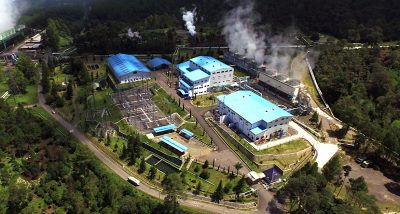
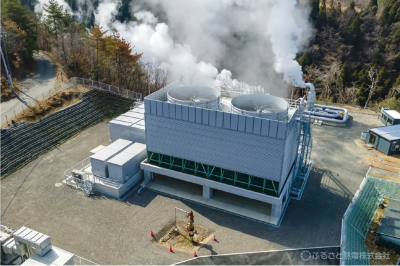
The Mutnovskaya 1 geothermal power plant (50 MW) in Kamchatka’s southern region. Despite recent tectonic and volcanic activity in Kamchatka, the peninsula’s geothermal power facilities have not been affected.
Kamchatka is home to three geothermal power plants operated by RusHydro, and importantly, these facilities are not in close proximity to the recent earthquake epicenter or erupting volcano. The plants are located in the southern and southwestern part of the peninsula, dozens of kilometers from the areas of volcanic activity. They include the following installations, according to ThinkGeoEnergy’s own research:
- Mutnovskaya 1 – 50 MW capacity
- Verkhne-Mutnovskaya – 12 MW capacity
- Pauzhetskaya – 12 MW capacity
All three geothermal power stations are clustered south of Petropavlovsk-Kamchatsky, whereas the July 30 quake and subsequent eruptions occurred far to the north and east. For example, the Mutnovskaya geothermal field is located about 60 km south of Kamchatka’s capital city en.wikipedia.org, near the Mutnovsky volcano plateau. In contrast, the active Klyuchevskoy volcano (which erupted after the large quake) lies roughly 450 km north of Petropavlovsk. This geographic separation means the geothermal facilities did not experience the intense shaking or ash fall from those events. Officials have not reported any disruptions to the geothermal plants’ operations, and no evacuation or special measures were needed at the sites. In the case of Krasheninnikov’s eruption, its ash plume remained over uninhabited terrain and posed no threat to infrastructure.
Figure: Kamchatka Peninsula in the context of the geothermal plants in the Asia-Pacific setting & the volcanoes (source: ThinkGeoEnergy geothermal plant map)
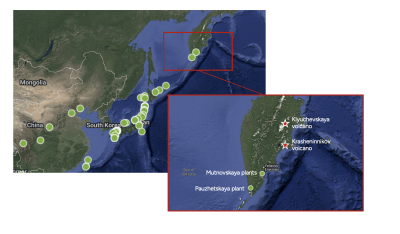
These observations underscore that Kamchatka’s geothermal power operations remain secure and unaffected by the recent natural events. A map illustrating the locations of the volcanoes and earthquake epicenter in relation to the geothermal plants would help visualize their wide geographic separation on the peninsula. (The planned map could pinpoint Krasheninnikov Volcano in the Kronotsky Nature Reserve, the offshore quake epicenter, and the Mutnovskaya/Pauzhetskaya geothermal sites in the south.)
Geothermal Operations and Ongoing Expansion
Not only have current geothermal operations continued without interruption, but Kamchatka is also moving forward with plans to expand its geothermal capacity.
In late July, RusHydro – the utility that owns all three existing geothermal plants – announced a new development initiative to boost renewable energy in the region. According to a recent RusHydro update, the company (through its local subsidiary Kamchatskenergo) has acquired a 51% stake in Geothermal Energy LLC, a developer previously under Russian oil firm Zarubezhneft, as part of a partnership to build a second geothermal power station at Mutnovsky. The proposed Mutnovskaya 2 plant will add 66.5 MW of capacity in Kamchatka’s Mutnovsky geothermal area. This project also involves installing a new 16.5 MW binary unit at the existing Mutnovskaya 1 power station to utilize additional heat from the field. Design and exploration work for Mutnovskaya 2 are expected to be completed by the end of 2027. Once operational, the expanded facilities will help meet growing electricity demand – a regional deficit of about 26–31 MW is projected by 2030 – and reduce reliance on imported fossil fuels.
Crucially, the recent earthquake and volcanic eruption have not derailed these geothermal development plans. RusHydro has indicated that all geothermal plants continue to operate normally, and no adverse impacts have been observed at the project sites. The resilience of Kamchatka’s geothermal infrastructure amid seismic events highlights a key advantage of geothermal energy in this volcanically active region. Local authorities and plant operators will, of course, continue to monitor geologic activity, but as of now geothermal power generation remains steady and secure.
References:
- Reuters – “Russia cancels tsunami warning for Kamchatka after quake, dormant volcano erupts”, Aug. 3, 2025 reuters.com.
- “Huge quake in Russia triggers tsunami warnings around Pacific”, July 31, 2025 reuters.com,reuters.com.
- ThinkGeoEnergy – “RusHydro acquires controlling stake of geothermal developer in Kamchatka, Russia”, July 24, 2025 thinkgeoenergy.com, thinkgeoenergy.com.
- Wikipedia – Mutnovskaya Power Station (accessed Aug. 2025) en.wikipedia.org.