Japan, New Zealand to conduct joint research on shallow and deep geothermal connectivity
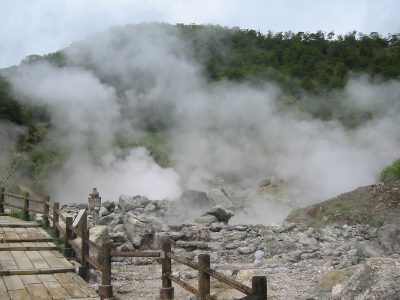
 Geothermal hot spring near Kokonoe, Oita Prefecture, Japan (source: flickr/ monkist, creative commons)


 Carlo Cariaga
29 Jan 2026
Carlo Cariaga
29 Jan 2026
New Zealand and Japanese institutions will be working on a joint research project on the connectivity between deep geothermal systems and shallow aquifers.
Earth Sciences New Zealand (ESNZ) and a group of Japanese institutions have signed an international joint research agreement for the “International Joint Research and Development Project on Understanding Connectivity between Shallow and Deep Geothermal Reservoirs.” The Japanese contingent is led by Kyushu University and includes Mitsubishi Gas Chemical Company (MGC) and the National Institute of Advanced Industrial Science and Technology (AIST).
The project aims to develop a method for assessing the connectivity between shallow hot spring aquifers and deep geothermal reservoirs using geophysical and geochemical methods. This is considered a key issue in geothermal power development in Japan, as it requires consideration of the needs of hot spring users and businesses and environmental conversation. Currently, geothermal only accounts for about 0.3% of Japan’s total electricity generation.
Meanwhile, New Zealand generates 15% to 20% of its electricity using geothermal resources. Large-scale surveys have already been done in the Taupo Volcanic Zone (TVZ) where the geothermal resources are concentrated. Geothermal development in New Zealand has been successfully done while balancing social and environmental factors. Thus, the geothermal areas have been divided into areas for active development, conditional development, and no-development zones.
The goal for the research is to apply the results of the collaborative studies to expanding the use of geothermal resources in Japan, including for power generation.
RELATED: Japan, New Zealand strengthen geothermal innovation partnerships
Source: Mitsubishi Gas Chemical Company