Gunung Lawu in Indonesia no longer identified as a Geothermal Working Area
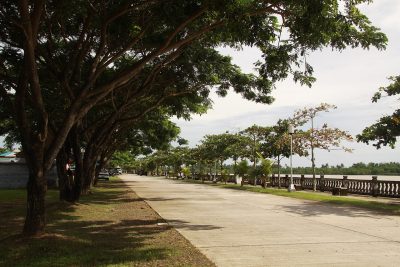
 Mount Gunung Lawu, Indonesia (source: flickr/ sakuntala_stei, creative commons)


 Carlo Cariaga
27 Oct 2025
Carlo Cariaga
27 Oct 2025
Due to its historical and spiritual value, the Gunung Lawu volcano in Indonesia is no longer within a Geothermal Working Area as confirmed by the MEMR.
The Indonesian Government, through the Ministry of Energy and Mineral Resources (MEMR), has confirmed that Gunung Lawu is no longer within a Geothermal Working Area (WKP) due to the historical, cultural, and spiritual values related to the mountain. Instead a new Jenawi Preliminary Survey and Exploration (PSPE) area was announced which excludes Gunung Lawu.
“We emphasize that Mount Lawu is not included in the Geothermal Working Area. There is no auction process or exploration activity in the area. The government adheres to the principle of caution and respect for the cultural and spiritual values ??of the community,” said Eniya Listiani Dewi, the Director General of New, Renewable Energy, and Energy Conservation (EBTKE) at MEMR.
The tender for geothermal development in the Gunung Lawu site, with an estimated 165-MW capacity, had initially been won by PT Pertamina Geothermal Energy back in 2016. The presence of ancient temples on the mountain and its cultural and spiritual value to the local communities proved to be challenges early on, and the company ultimately terminated development plans by 2022. The WKP was officially withdrawn by 2023.
The Jenawi District was proposed as an alternative location due to its distance from cultural heritage areas, spiritual sites, and areas closely associated with Mount Lawu. The decision was also based on follow-up discussions with the Karanganyar Regency Government.
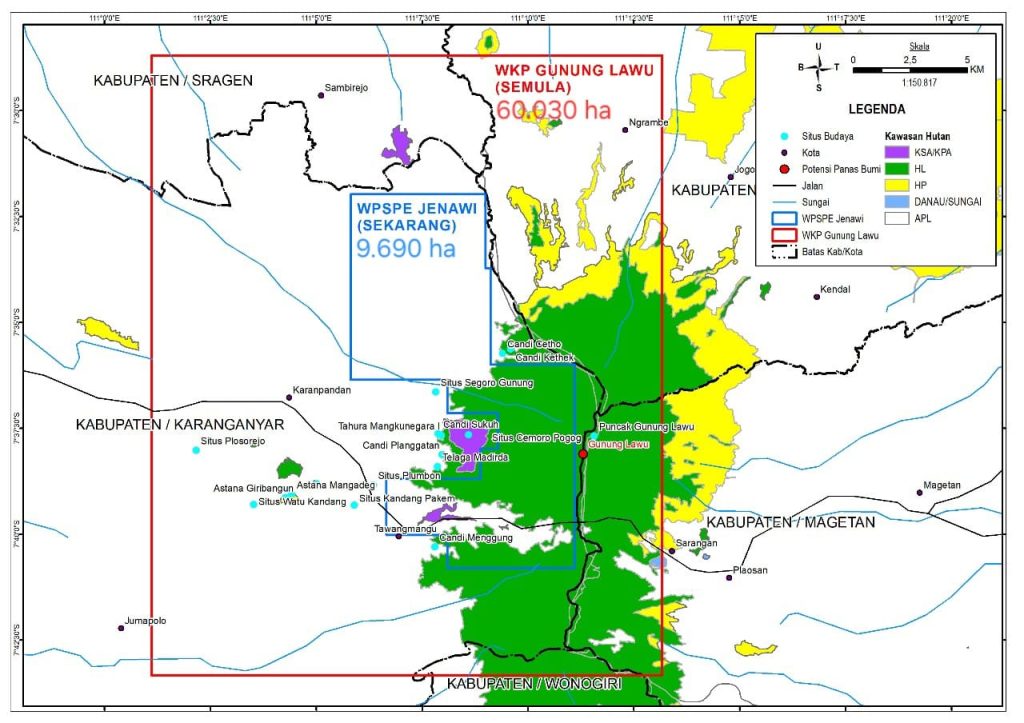
The Jenawi site only a PSPE for now, which means that only a geoscientific study will be permitted. Such a study will then be the bases for determining a drilling location for at least one exploration well, and as a basis for developing up to 40 MW of potential at the site. The government emphasizes that all cultural sites, sacred areas, and locations important to the community are excluded from the study area.
The government also emphasized that PSPE activities will not be implemented until the audience, outreach, and open discussions with all stakeholders have been completed. Considering all social, cultural, and environmental aspects, the Jenawi PSPE will definitely not be implemented in 2025.
“We want to ensure that all processes are carried out carefully and are acceptable to all parties. As long as the dialogue is ongoing and the stages are not yet complete, we will not implement the PSPE in Jenawi,” Eniya concluded.