
Government agencies in conflict over geothermal targets in Taiwan

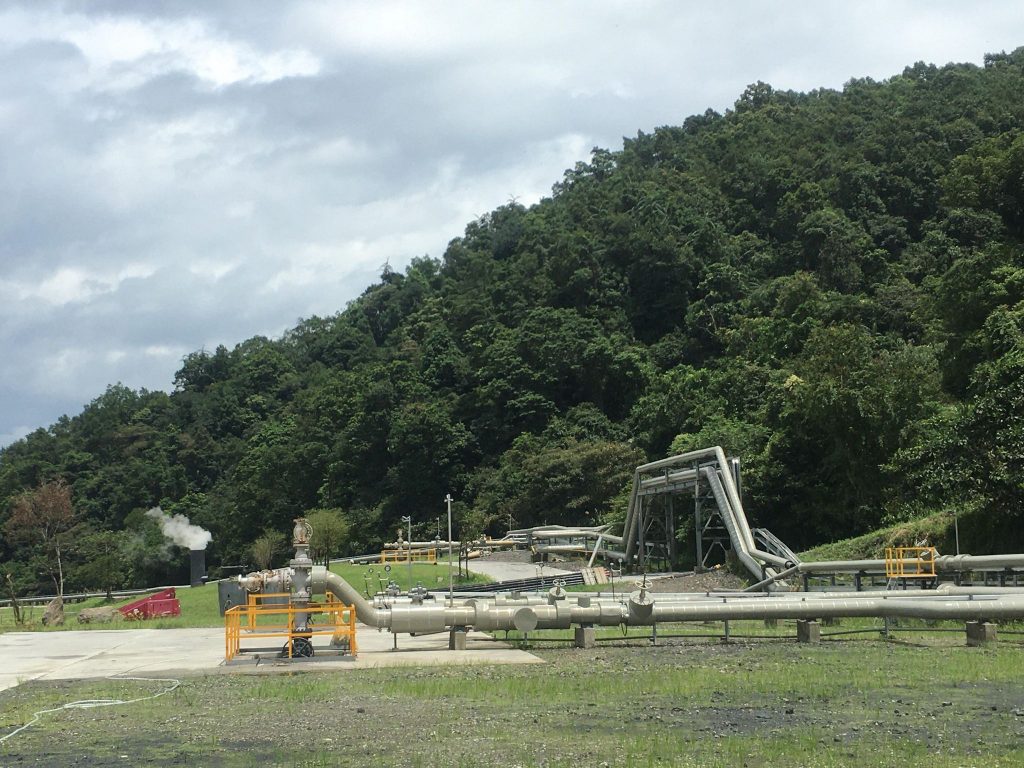
Two government agencies in Taiwan are reporting conflicting targets for geothermal sector growth, highlighting the nuances of ambition versus pragmatism.
A recent meeting held by the Economics Committee of the Legislative Yuan of Taiwan created confusion among two government agencies as they reported different targets for the growth of the country’s geothermal power sector. The Ministry of Economic Affairs (MOEA) proposed a target of 200 MW by 2030, while the National Development Council (NDC) proposed a much higher target of 1.2 GW.
Legislators expressed dissatisfaction over the discrepancy, mainly because of the large difference between the two figures. Chiu Chih-wei questioned the scientific basis for the 1.2 GW target, as well as the pragmatic approach of lowering the target to 200 MW.
The target set by the MOEA is consistent with statements made during the 2024 Taiwan International Geothermal Conference (TIGC) – 20 MW by 2025, 200 MW by 2030, and 2 GW by 2040. The NDC explained that their data had been previously set with relevant ministries and now will be rechecked based on adjustments made by the MOEA.
Ambition versus pragmatism
The vastly different target numbers of Taiwan highlight a dilemma for the industry – is it better to set ambitious targets to highlight the vast potential of geothermal, or would it be better to set more modest, and therefore more realistic, targets?
As highlighted during this year’s TIGC, Taiwan currently has an installed geothermal power generation capacity of about 13.6 MW. Earlier this year, the largest geothermal power plant so far in Taiwan came online – the 5.4 Tuchang geothermal power plant in Yilan. The development pipeline also seems to be quite active, with both the 1-MW Hongye power plant and the 1.95-MW Jinlun expected to come online later this year, as well as the upgrade of the Renze geothermal power plant to 3 MW. Taiwan is also looking into next-generation geothermal solutions, and international companies have expressed interest in helping to develop such projects.
For an emerging geothermal sector like that of Taiwan, projects at a small scale are expected as developers and research institutes work to gain a better understanding of the subsurface conditions. Enabling circumstances, such as green electricity incentives and research grants, can help accelerate this process. However, there are inevitable bottlenecks – permitting, community engagement, surface studies, drilling, data analysis, contract negotiations, and raising funding all take time.
All things considered, developing 200 MW in four years would actually be quite impressive and will be a worthwhile milestone for Taiwan, should they achieve it.
Source: Chinatimes.com and Taisounds.com